
Replacing Newark's Lead Service Lines
The City worked with the County of Essex and the State of New Jersey to identify innovative funding sources to provide full financial support for removal of the lines, eliminating the typical cost-sharing arrangements with residents or landlords. To further aid in the removal process, Newark enacted a groundbreaking local ordinance permitting the city’s water department to dig on private property, eliminating another significant obstacle. Once these financial and legal hurdles were cleared, Newark launched its replacement program with the goal of complete replacement within three years.
Working throughout the pandemic, Newark replaced all of lead service lines (LSL) at the cost of $170 million by the end of 2021, outpacing its initial forecast for completion.
Newark’s success in juggling political, logistical, and financial challenges in its journey to replace its lead service lines suggests that there are solutions to the U.S.’s monumental lead pipe problem. The 2021 federal infrastructure plan includes $15 billion to replace lead pipes across the U.S., but this is only partial funding. Each city and state must come up with its own solutions.
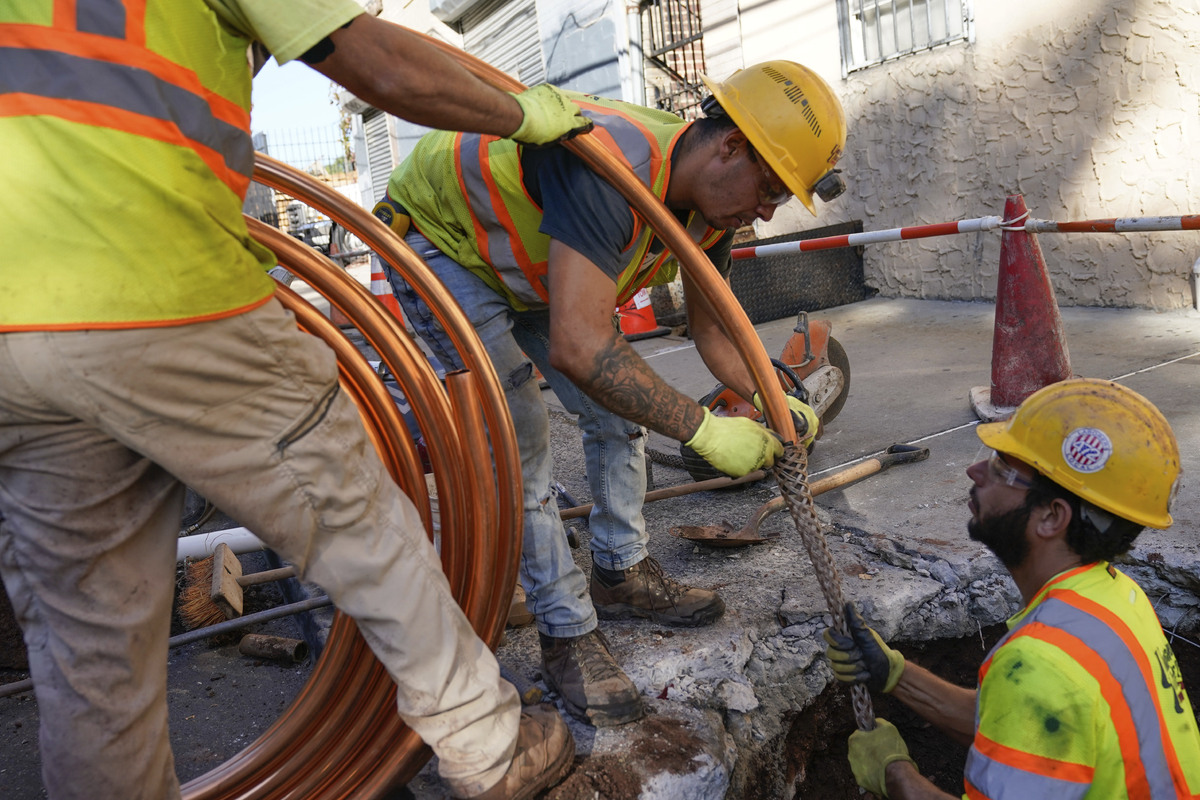
Using Local Contractors During the COVID-19 Pandemic
The City of Newark mandated that contractors hire Newark people. It also developed a unique apprenticeship program that trained and hired 50 local contractors, the majority of whom were people of color, to perform the LSL replacements. This increased employment opportunities for residents and maximized impact on the local economy—particularly vital during the COVID-19 pandemic.
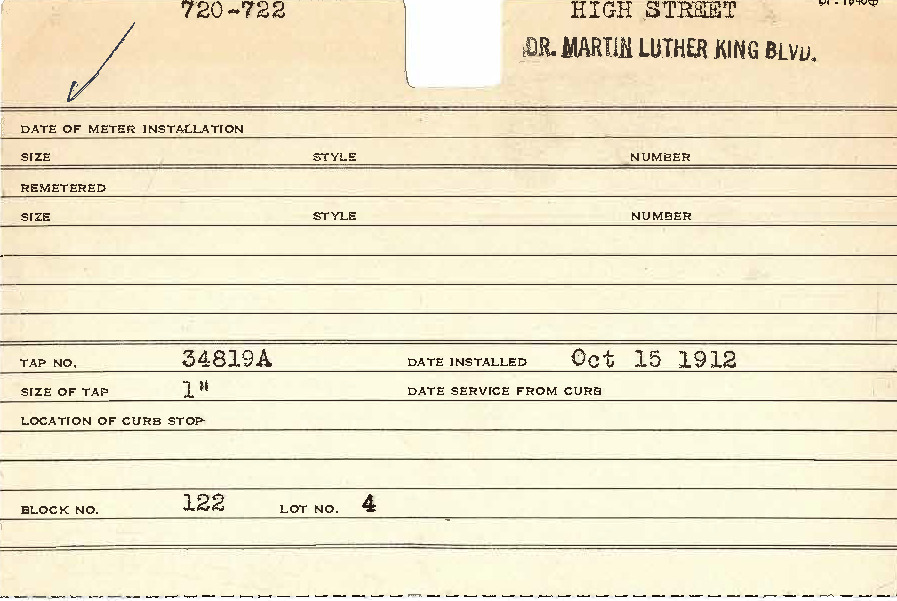
Using Historic Records
Newark’s replacement of its lead service lines was expedited by the fact that the City kept excellent records about their locations.
The first example is the historic Plume House. A registered historic landmark, the building is one of the oldest houses in the state of New Jersey and now serves as the House of Prayer Episcopal Church and Rectory. The cards, including a map with the lead service line outlined in red, document renewal of service lines from 1913 through 1934. The Lead Service Line Replacement program replaced the lead pipes with copper pipes on February 2, 2022.
The second example dating from 1916 is the Kreuger-Scott Mansion, also a historic landmark. The record card indicates that a lead service line existed in 1942.
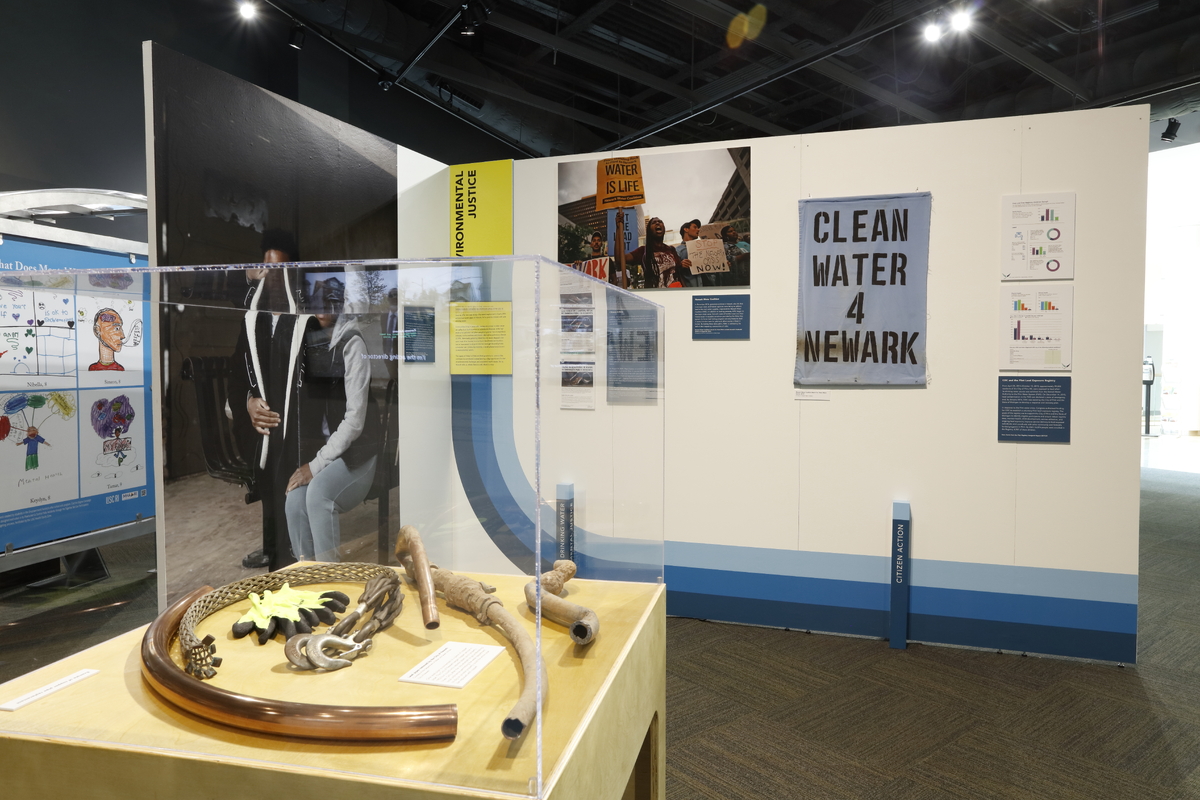
One lead pipe is connected to a piece of copper pipe. The City of Newark began copper service in 1953 but could only replace pipes up to property lines. Only after the City enacted its groundbreaking local ordinance permitting the water department to dig on private property could the entire pipe be replaced with copper.