Community Schools: A Holistic Approach to Education

Community schools are a powerful and proven strategy for achieving the goal of educational equity. Using existing neighborhood schools as hubs, community schools bring educators, families, policymakers, and community partners together to increase the resources, supports, and services available to children, families, and communities. They are schools designed so that all students, regardless of their ZIP code, can receive an excellent education that cultivates and inspires their hopes, skills, and sense of self-efficacy.
Local engagement is central to the success of community schools. Recognizing that education is a shared responsibility, community schools ensure families, students, and community members have a say in deciding what will work best for student success. They are academic and social centers where educators, families, and neighbors come together to support innovative learning and to address the impact of out-of-school factors, such as poverty, racism, and violence. Piloted by rural, suburban, and urban public school systems across the U.S., community schools can be pathways to ensuring that all children achieve their full potential.
Courtesy of The California Endowment, The Alliance for Boys and Men of Color, and The California Partnership for the Future of Learning
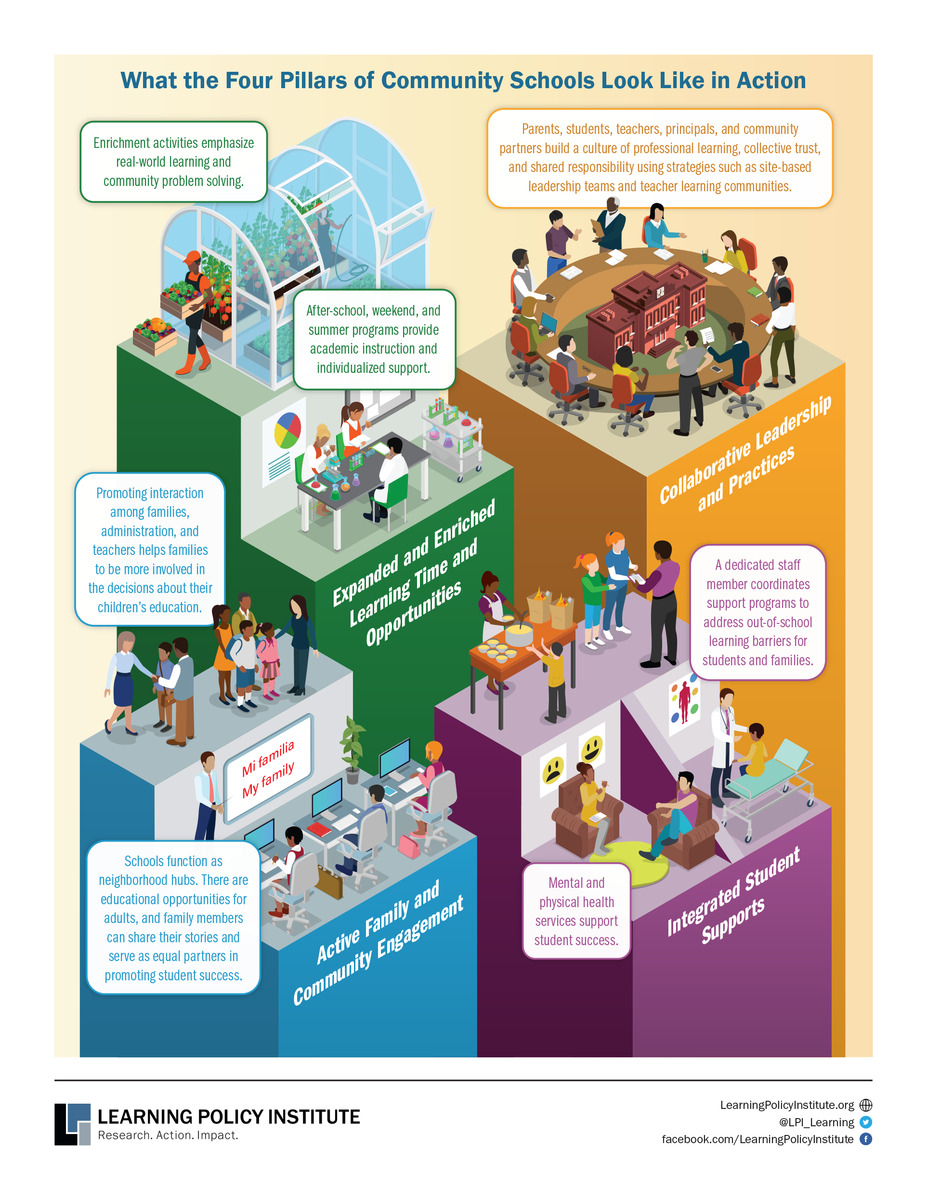
Community Schools Four Pillars of Success
Successful community schools combine four key pillars (or features) to create the conditions necessary for students to thrive: integrated student supports; expanded and enriched learning time and opportunities; active family and community engagement; and collaborative leadership and practices. Local school systems, community-based organizations, social service agencies, and libraries, along with students and their parents, use these pillars as a foundation to develop schools that best address conditions in their communities.