
Using the Lived Experience to Address Obstetric Racism
The data are profound: discrimination plays a role in 3 in 10 pregnancy related deaths, according to CDC statistics. Black pregnant women and birthing people are three times as likely to die from pregnancy-related causes as White women. More than 8 in 10 pregnancy-related deaths are preventable. In fact, personal stories behind these data provide the strongest evidence of this disturbing trend. While there are many factors contributing to this inequity, such as socioeconomic factors or access to healthcare, many Black women experience what is termed “obstetric racism” in hospitals and medical encounters. They tell stories of diagnostic lapses, neglect, and abuse, among other harmful hospital experiences.
Dr. Karen A. Scott of Birthing Cultural Rigor has developed the PREM-OB Scale® tool to quantify obstetric racism through these community-driven experiences and benchmarked hospital performances. The tools offer strategies to transform hospital practices, policies and people based on progress in advancing a more holistic obstetric care model. Focused on kinship, humanity, and racism, the model affirms and amplifies the experiences of Black women navigating the challenges and beauties of childbirth.
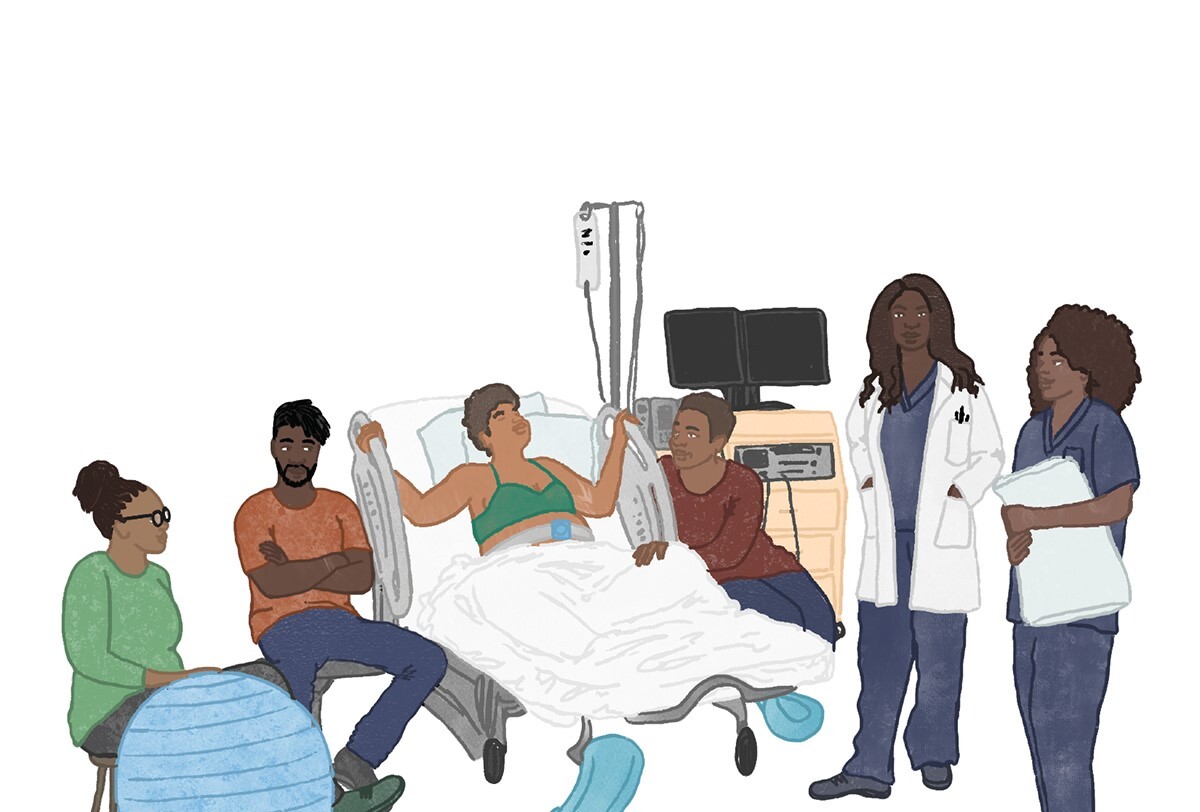
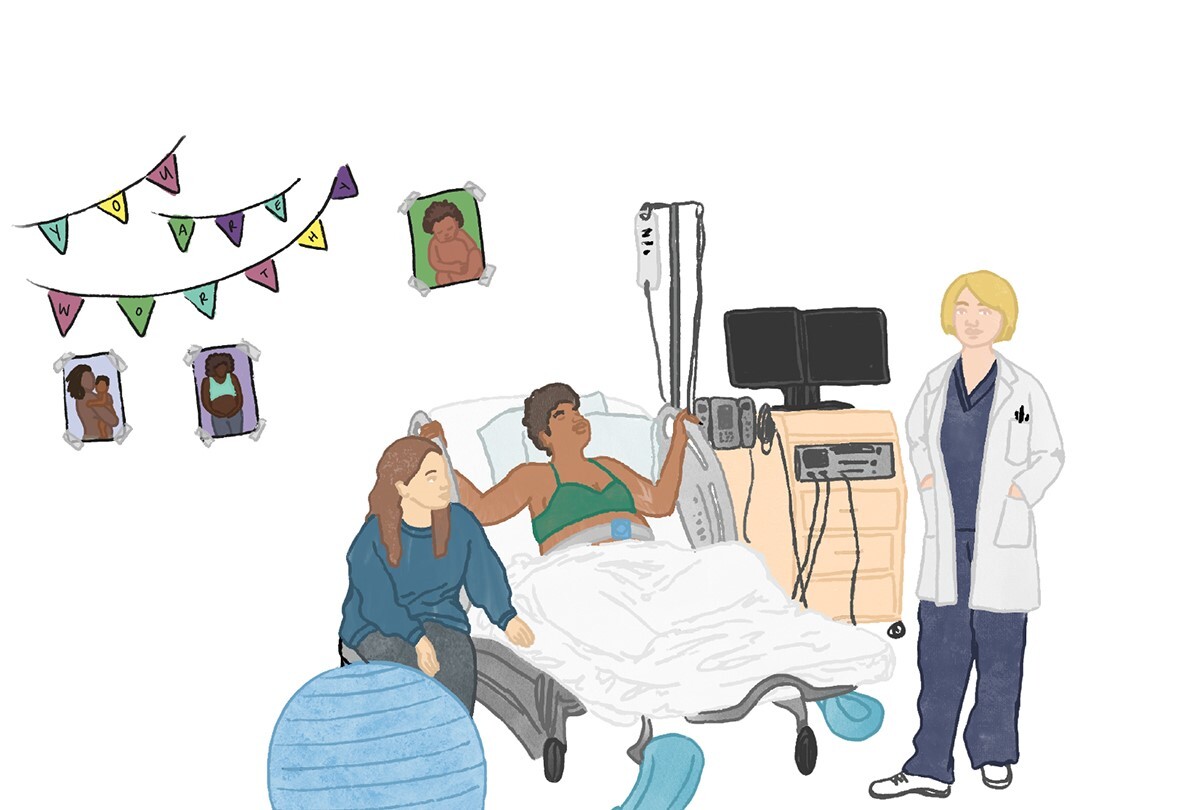
To translate theory into practice, the SACKRED quality framework offers patient-identified quality measures throughout labor, birth and immediate postpartum during hospitalization. Identified by patients, the measures include:
Safety & Accountability
Autonomy
Community and Information Exchange
Kinship
Racism
Empathy & Humanity
Dignity in Blackness & holistic care.
The framework offers two scenarios of the hospital birthing experience that celebrate the dignity of birthing while Black. The first illustrates a Black birthing parent surrounded by her family and Black birth workers. The second acknowledges that in many instances, the community and hospital team providing care are not Black birth workers due to structural issues around workforce accessibility, compensation, and development. In this instance, a White doctor and doula are asking questions that honor the Black birthing patient’s cultural and personal preferences, values, and needs.