
Improving Safety and Health among Mexican Immigrant Workers
In 2021, about 10.7 million Mexican-born individuals were living in the United States--the largest group of Latinos living in the U.S. Mexicans also account for the largest group of unauthorized immigrants: 48 percent of the total 11 million people in 2019, according to estimates from the Migration Policy Institute. Often, these Mexican immigrants work in “3D” jobs—dirty, dangerous, and demanding.
Latino immigrants are 50% more likely than all workers in the U.S. to experience a fatal work injury because they often work in occupations with elevated risks, such as construction. Furthermore, lack of access to health care, discrimination, language barriers, lack of workplace safety procedures, fear of retaliation, and lack of authorization for those who are undocumented are among the factors that make it difficult for immigrant workers to access information, resources, and services needed to improve their occupational and health status.
Protéjase (Protect Yourself): A Binational Collaboration
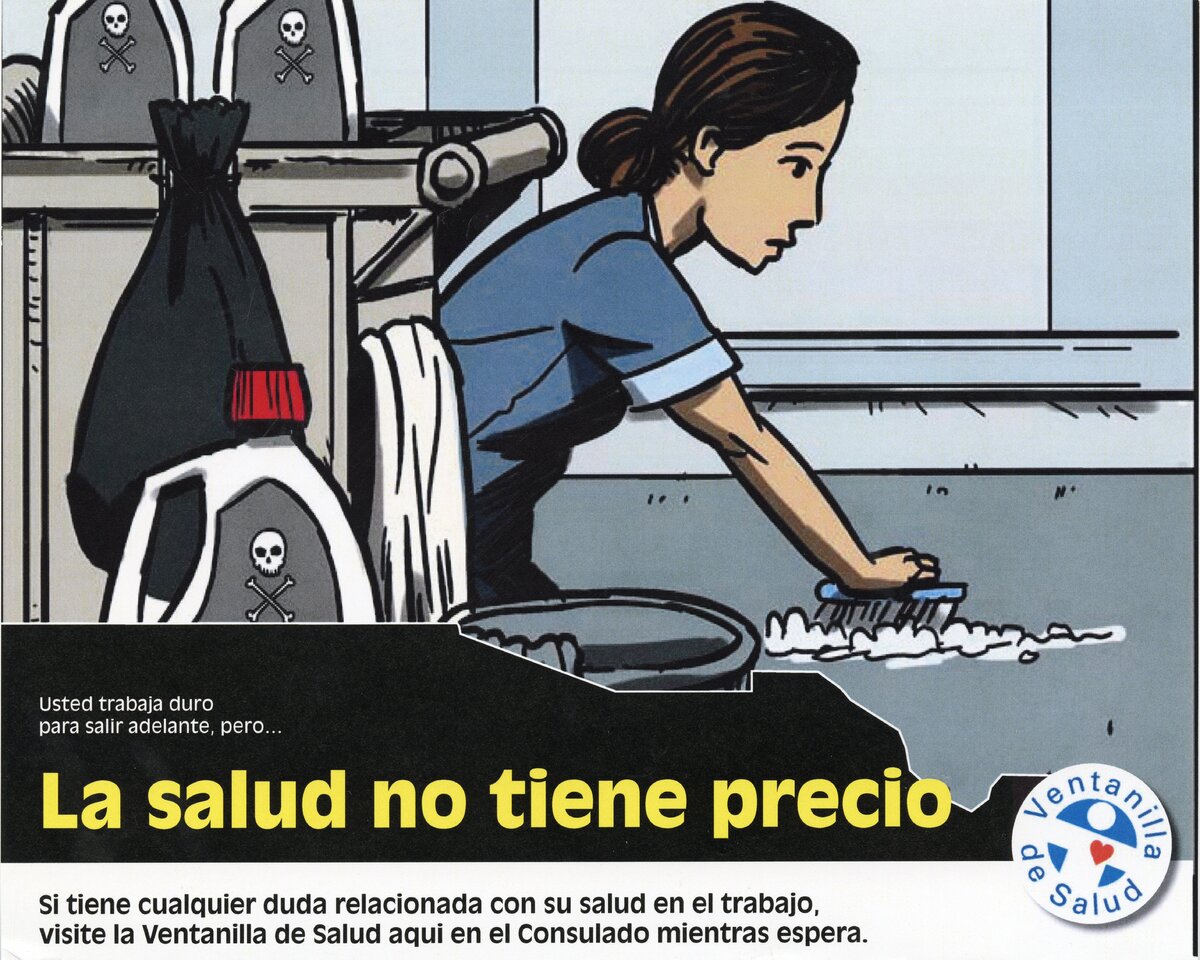
Mexicans living in the U.S. often turn to the network of Mexican consulates across the U.S., now in 53 cities, to obtain services. Responding to Mexicans living in the U.S.—regardless of their immigration status, the Mexican Ministry of Foreign Affairs established its Ventanillas de Salud (VDS/Health Windows) program at its Mexican Consulates in 2003.
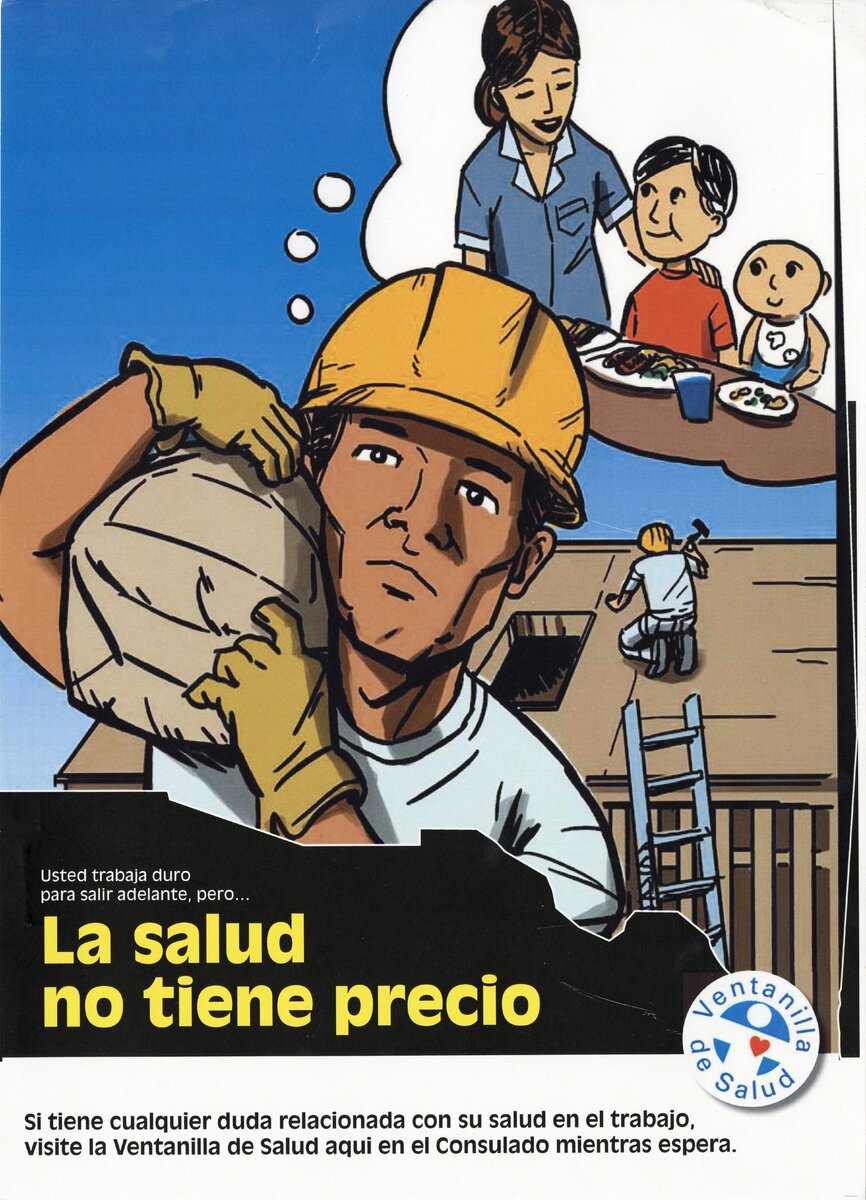
In 2013, the Mexican Ministry of Foreign Affairs launched the Protéjase (Protect Yourself) initiative, a binational collaboration with CDC’s National Institute for Occupational Safety and Health (NIOSH). Through posters, brochures and videos, the project sent out workplace safety information, and gathered surveillance and research data. Protéjase targeted industries in which many Mexican nationals work, including construction and hospitality.
Protéjase officially debuted in 2015 at Mexican consulates across the U.S. The materials are made available to other venues serving Mexican immigrants through the NIOSH website.
Testing Messages
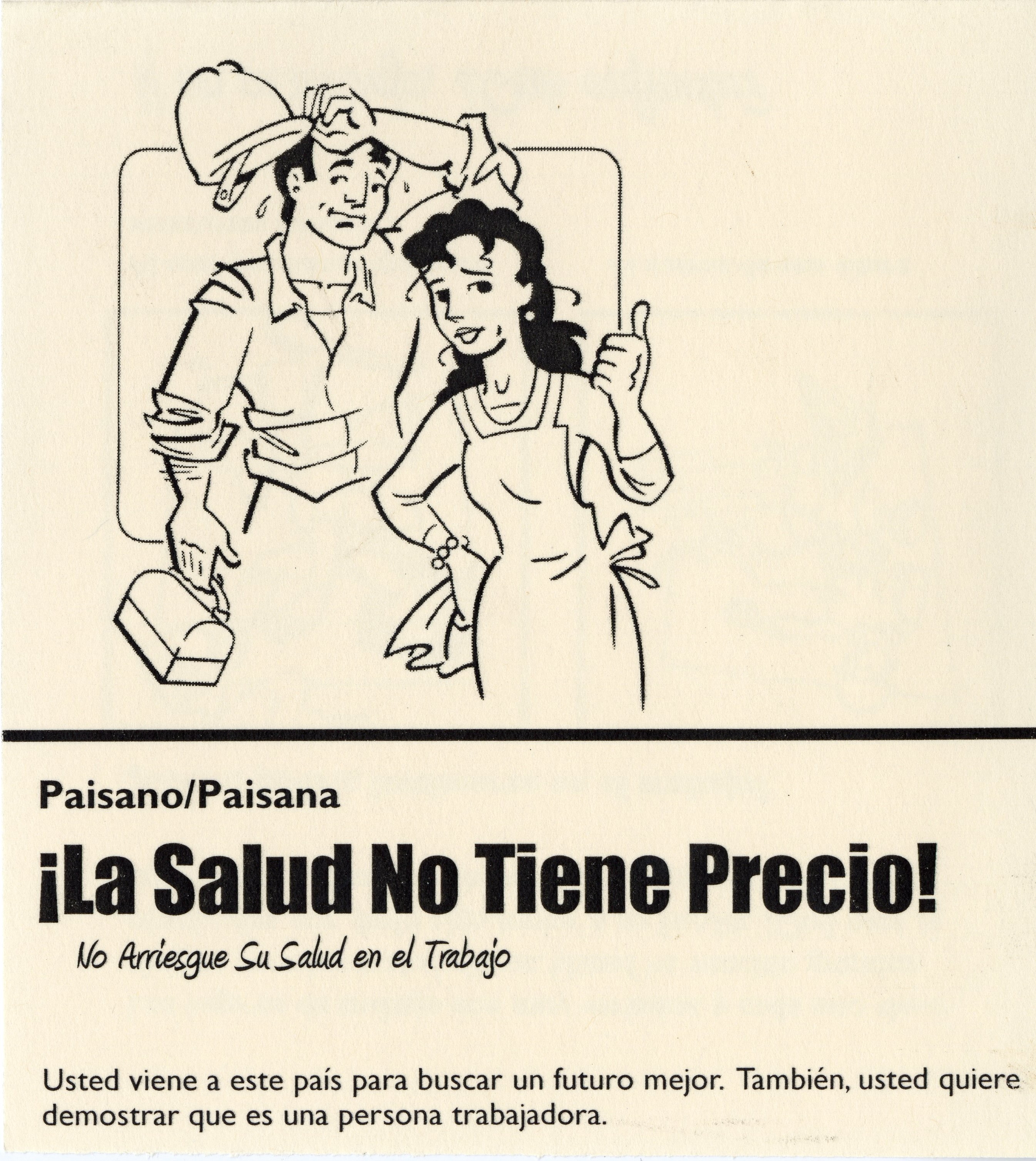
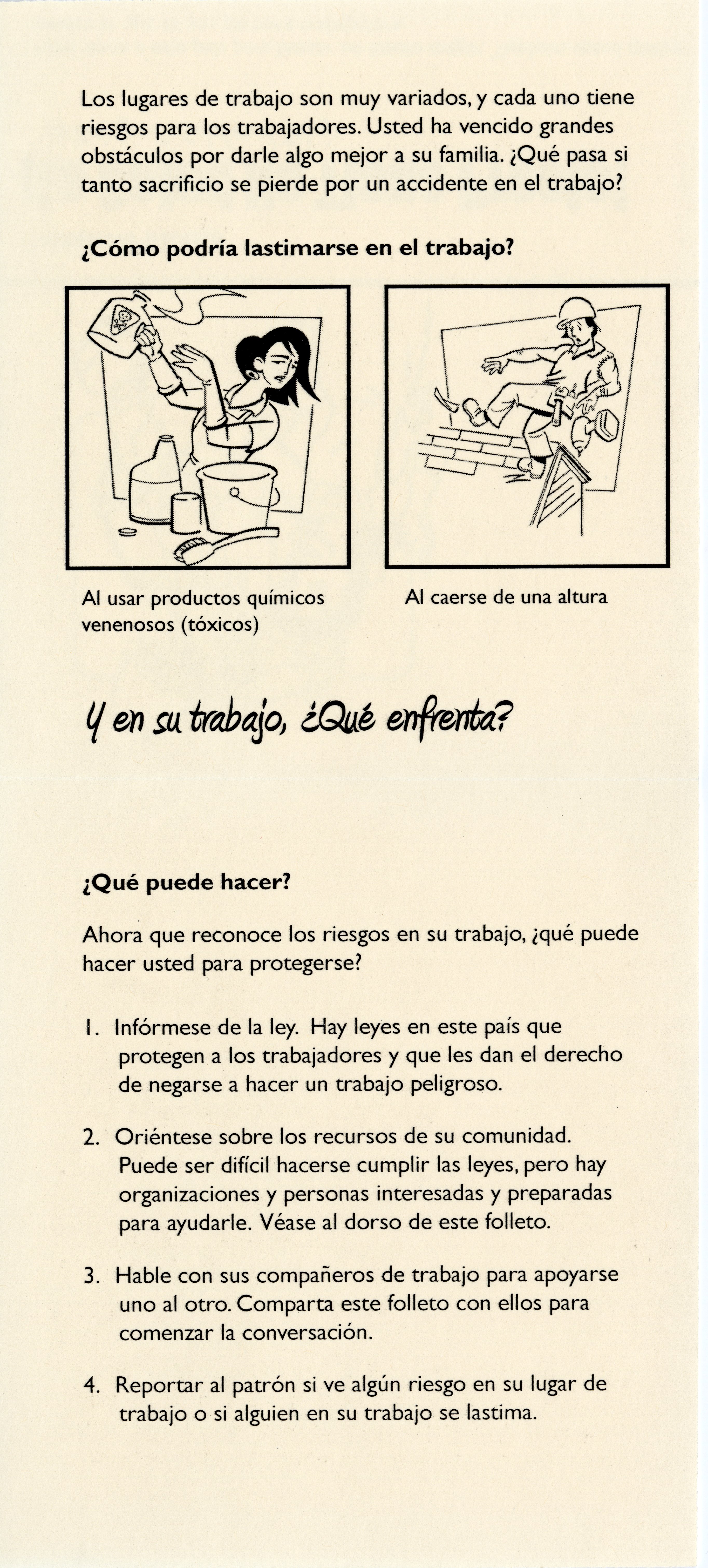
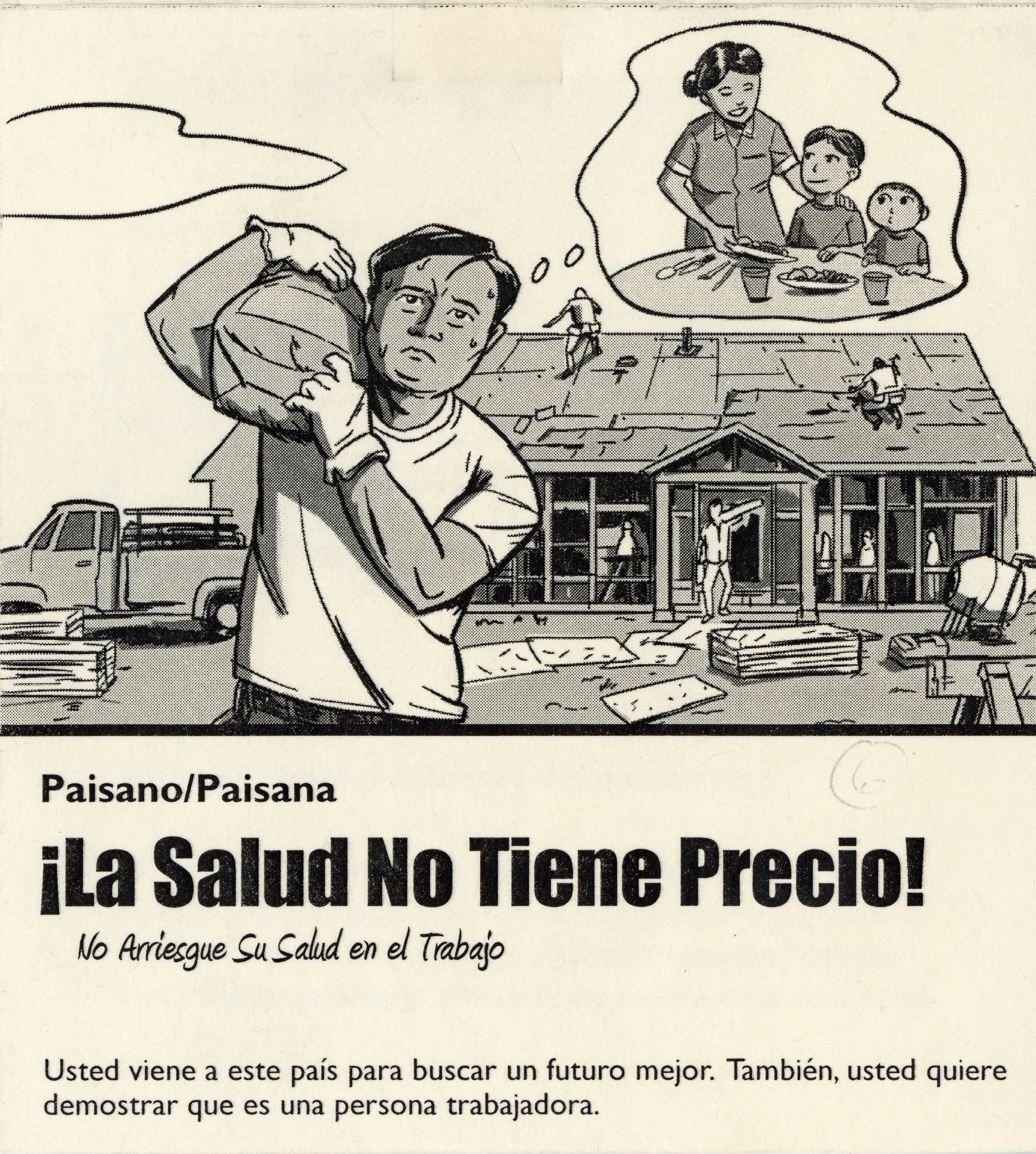
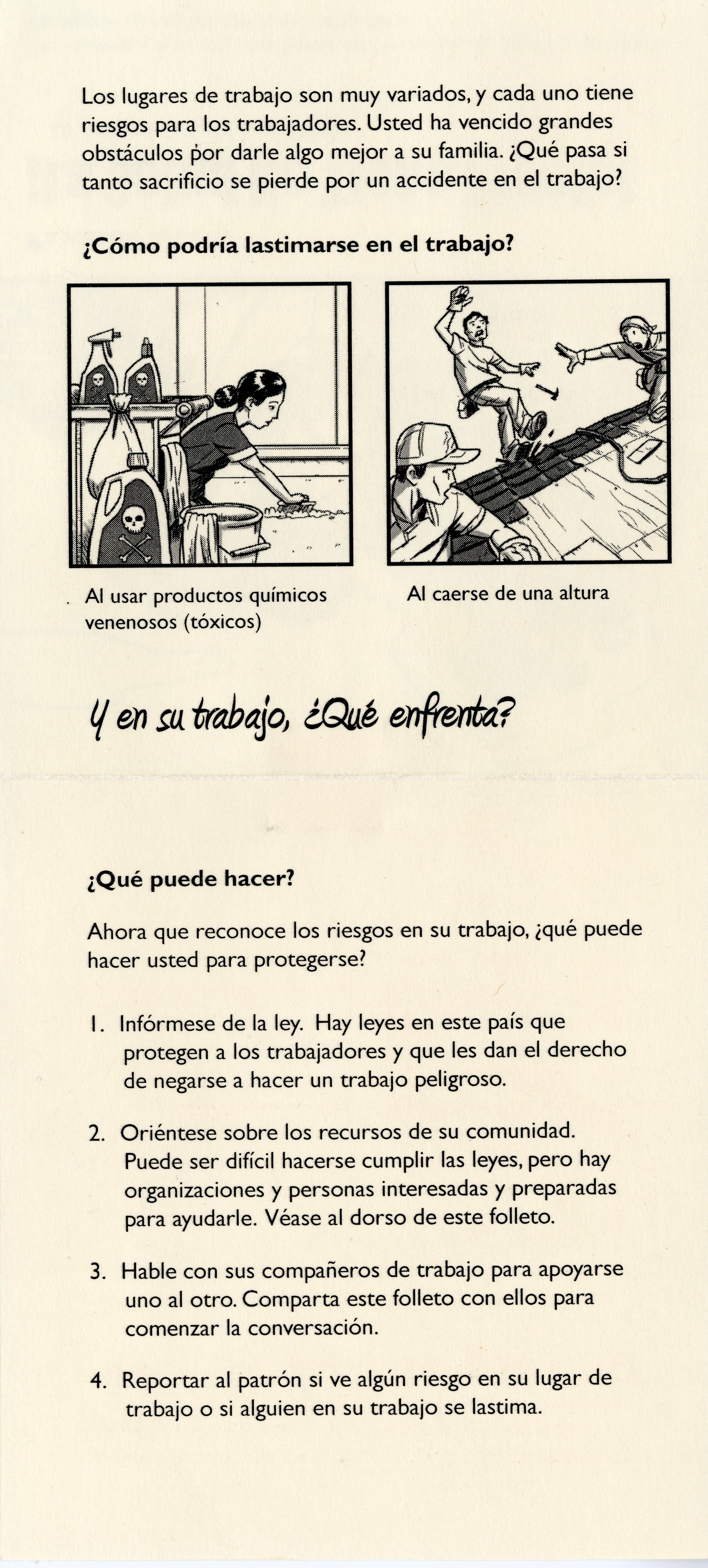
Early in project development, collaboration members decided to use original illustrations to convey its key message “return home from work safely and with dignity.”
NIOSH recruited six artists to create rough draft illustrations in response to this prompt: “You have come to this country looking for a better future. You also want to show that you are hardworking. You have overcome great obstacles to give your family a better life.”
The artists’ works were then tested with the target audience. Their responses confirmed that the illustrations were strong vehicles for telling a story. Ultimately, Boston-based artist Chi-Yun Lau was selected.
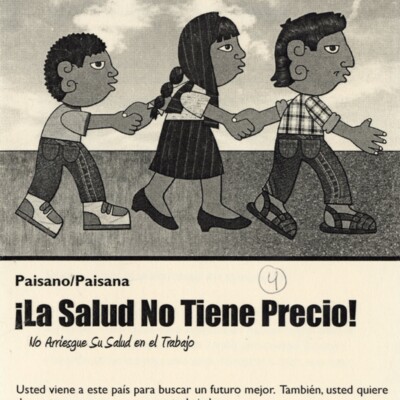
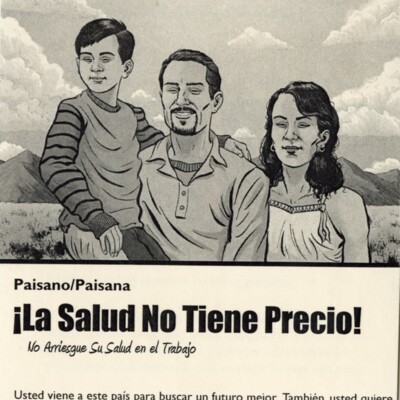
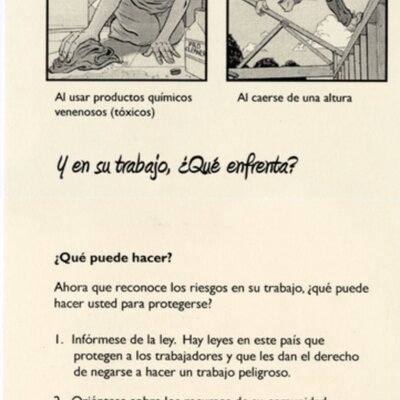
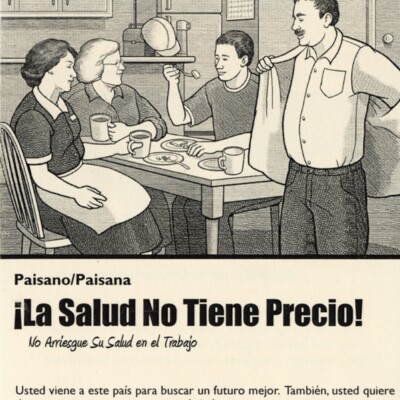
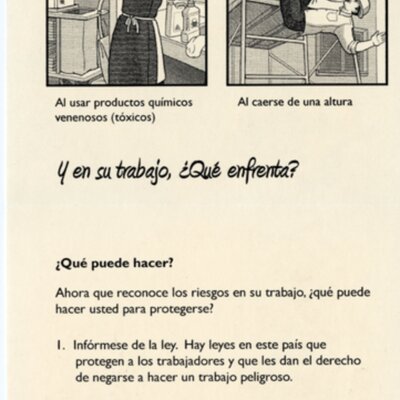
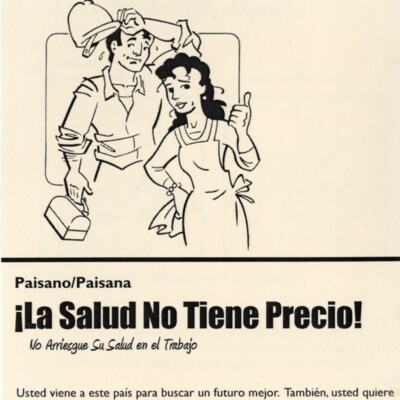
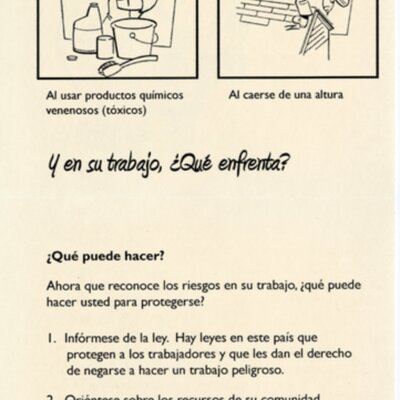
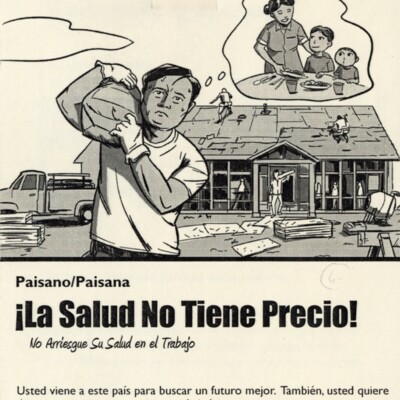
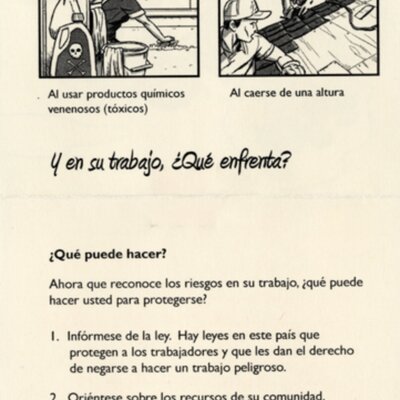
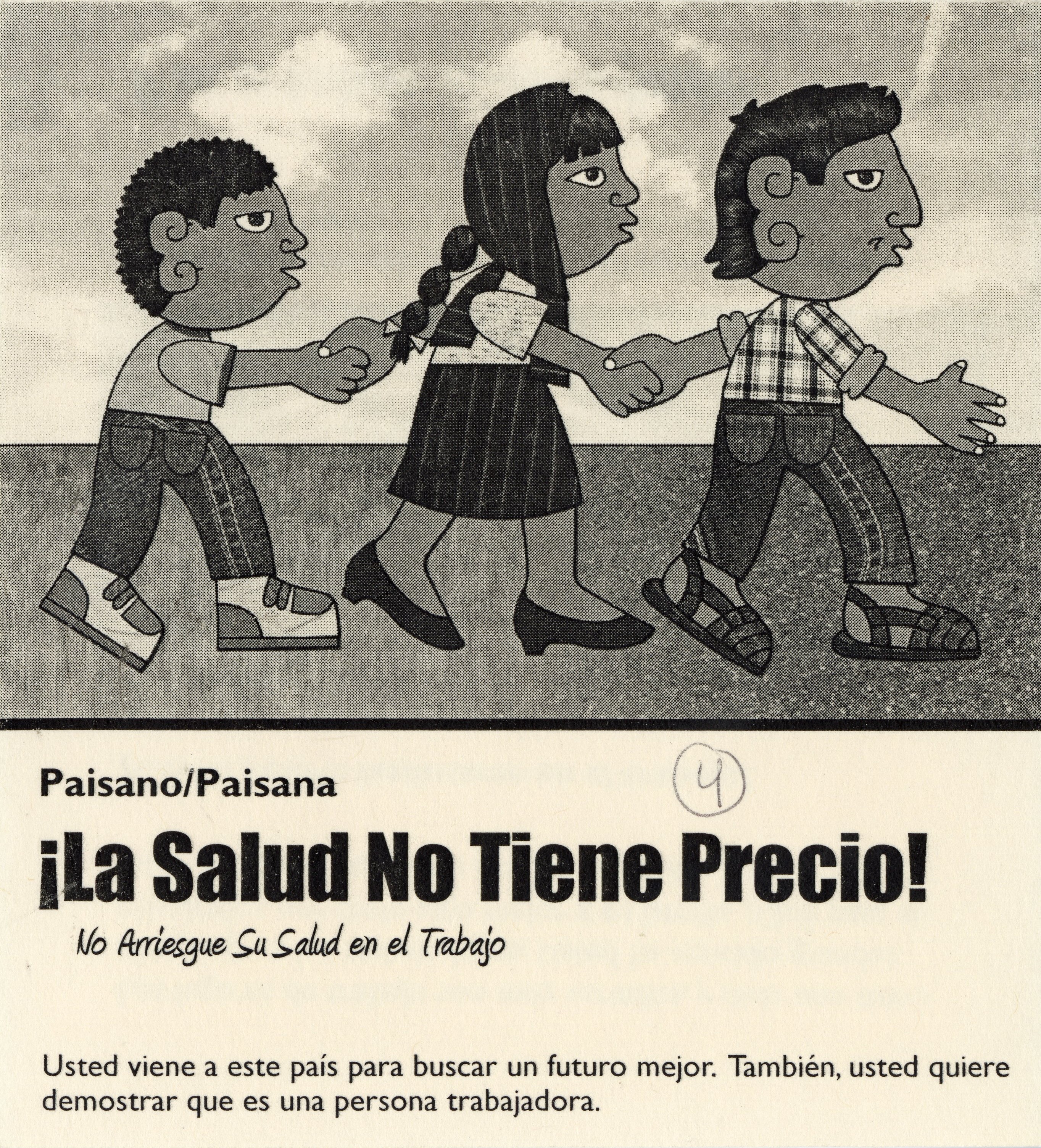
¡La Salud No Tiene Precio! Brochure
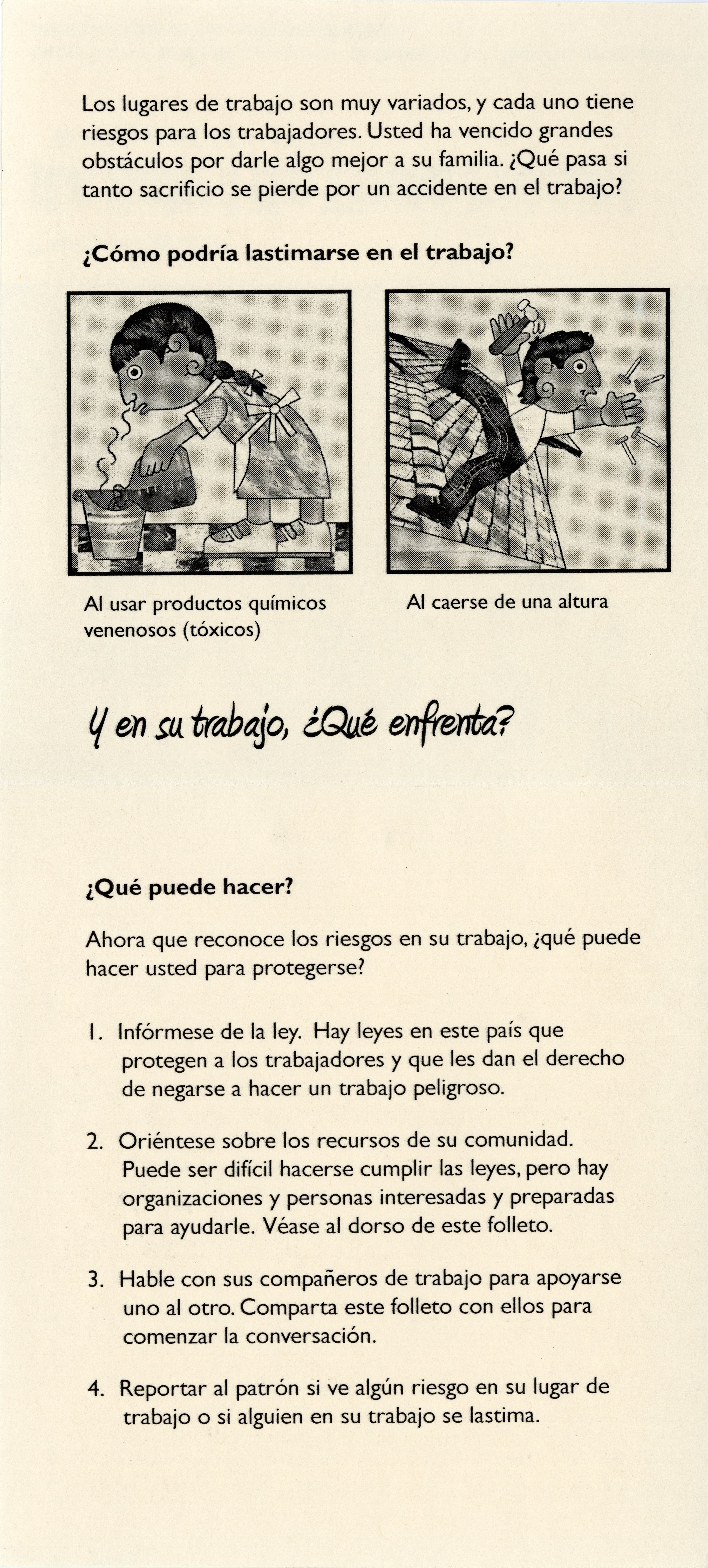
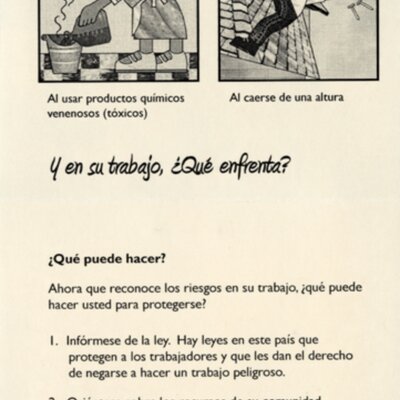
¡La Salud No Tiene Precio! Brochure
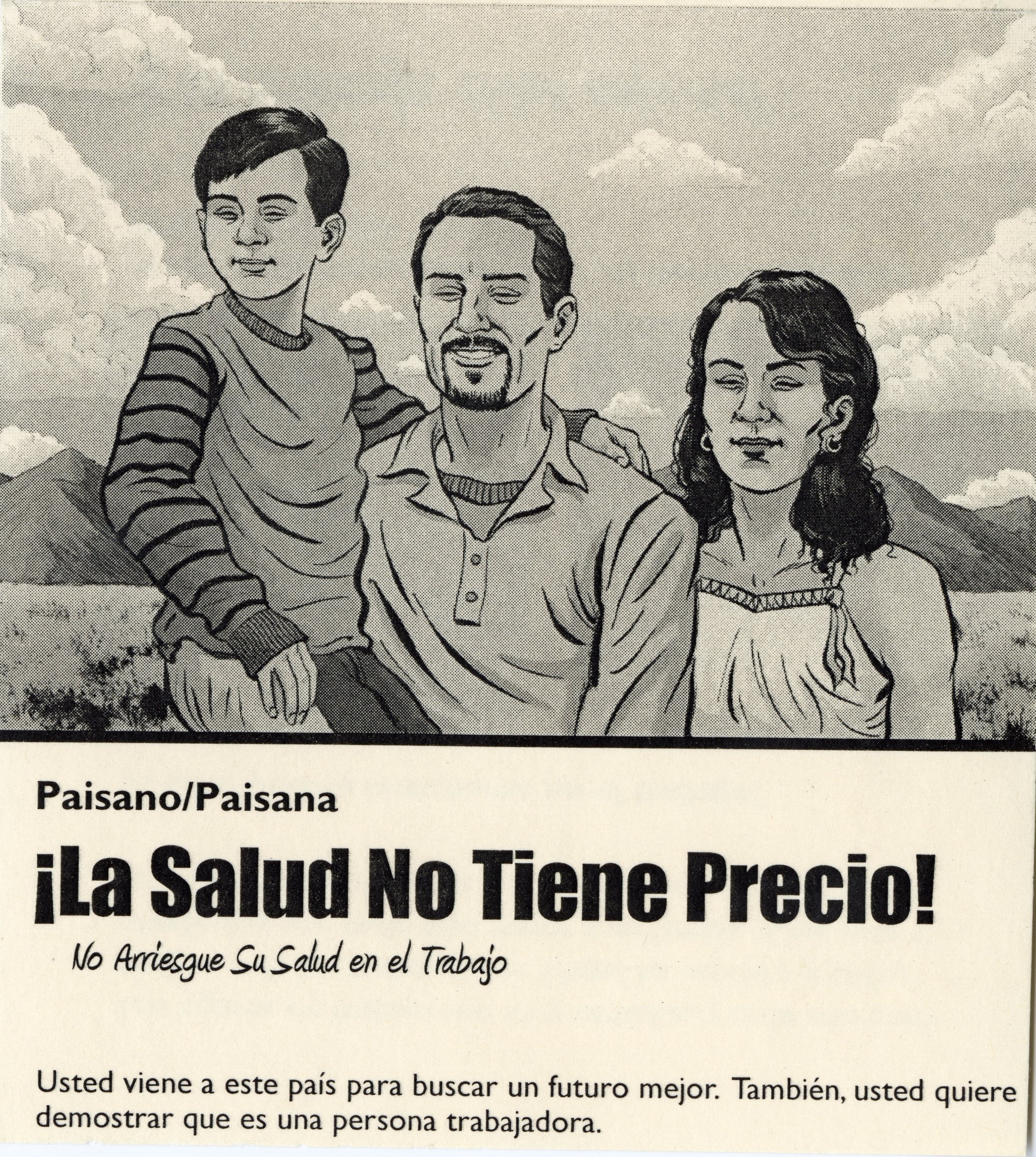
¡La Salud No Tiene Precio! Brochure
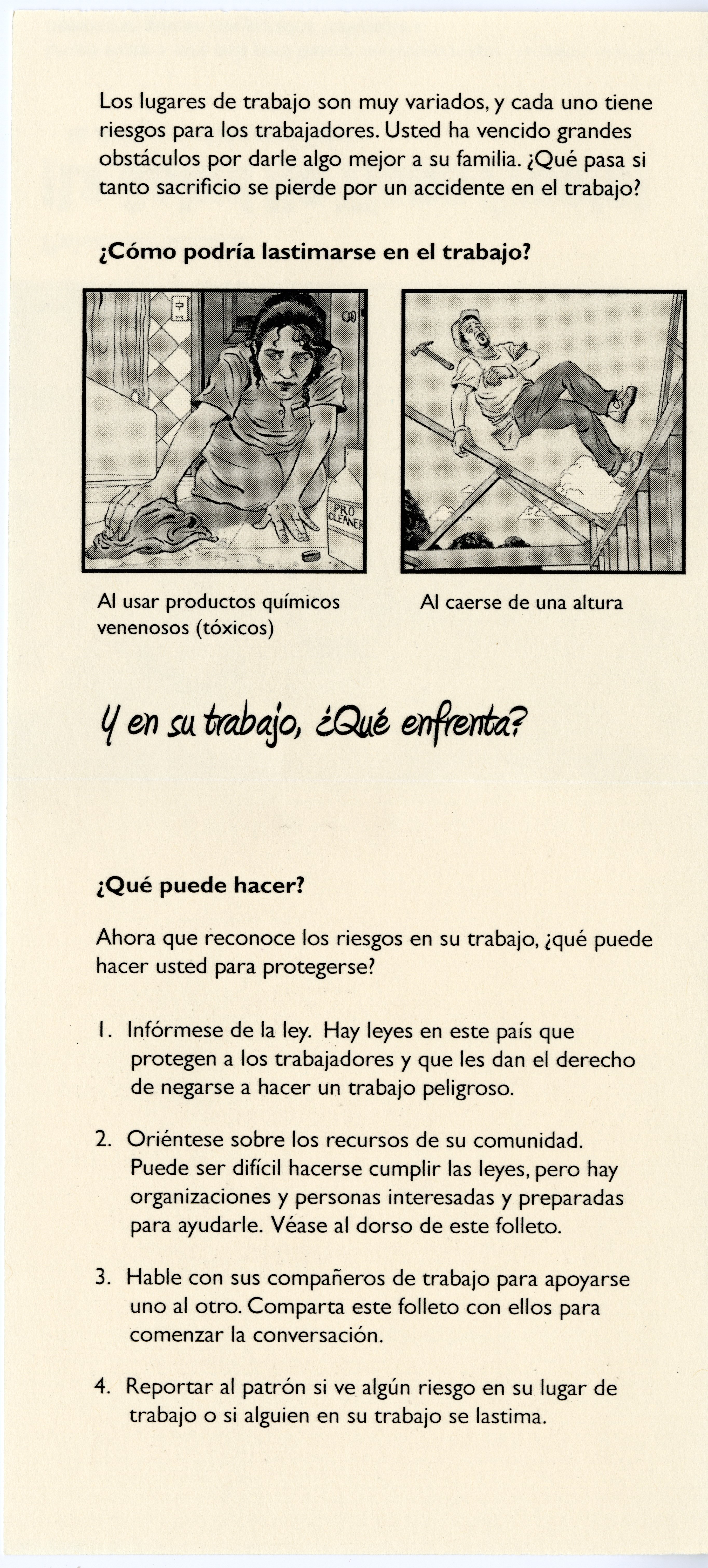
¡La Salud No Tiene Precio! Brochure
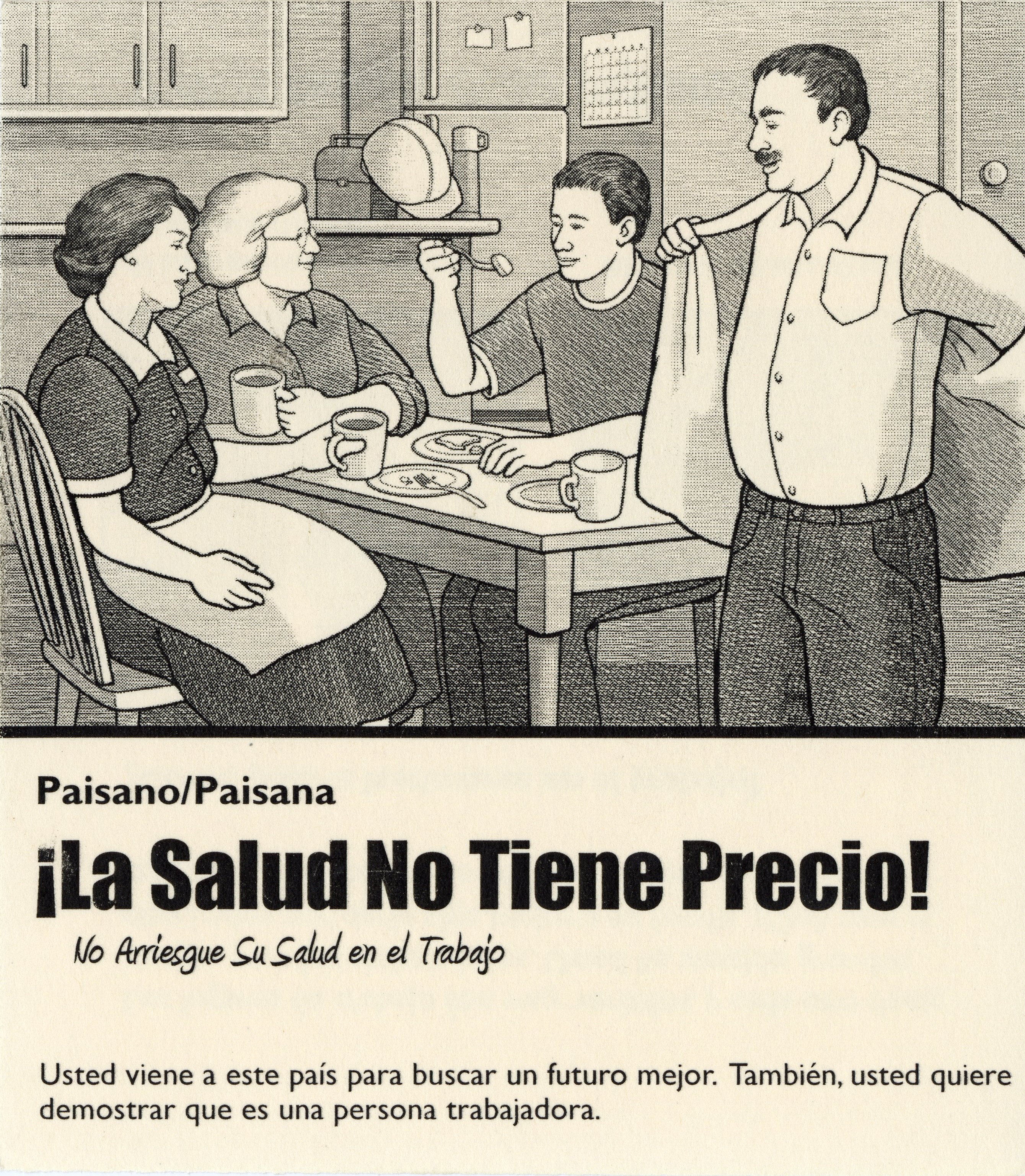
¡La Salud No Tiene Precio! Brochure
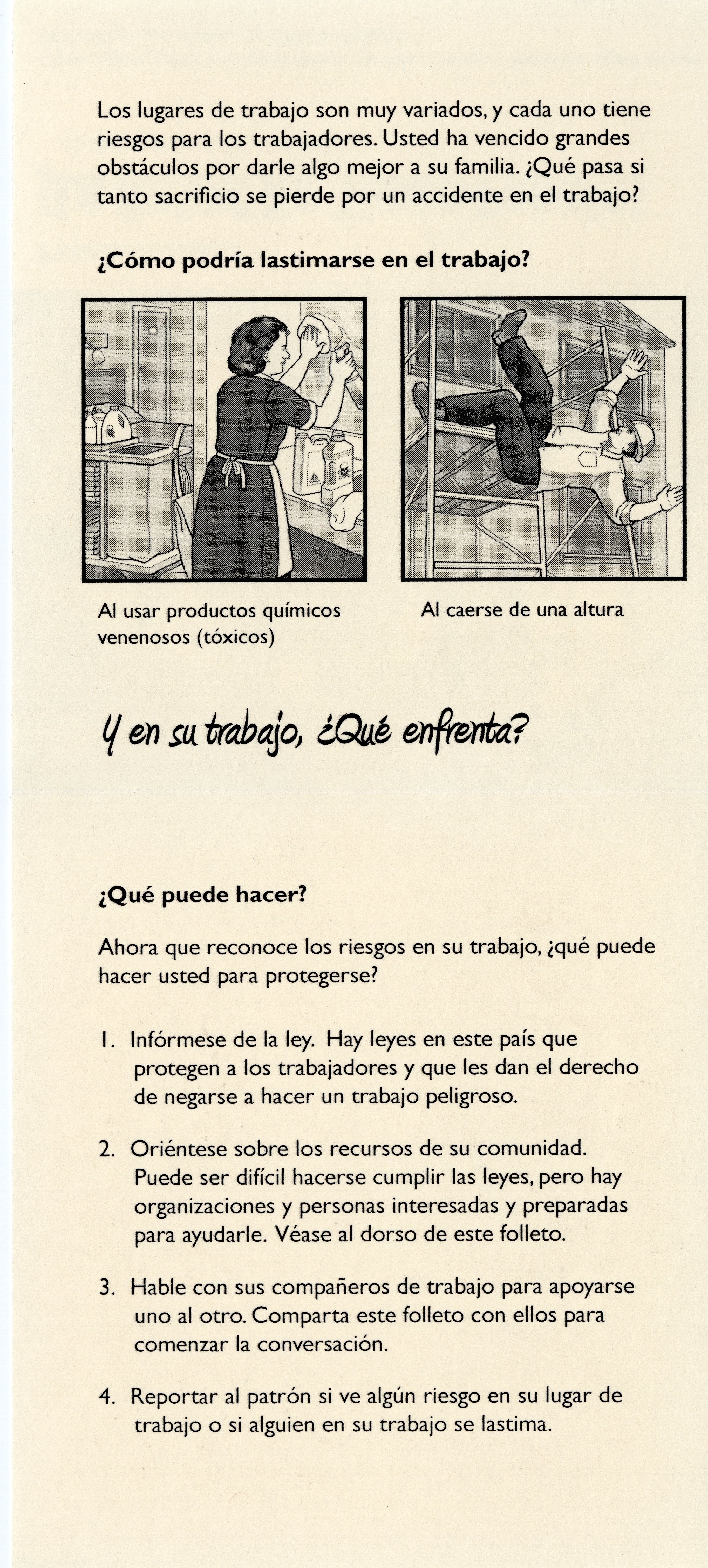
¡La Salud No Tiene Precio! Brochure
¡La Salud No Tiene Precio! Brochure
¡La Salud No Tiene Precio! Brochure
¡La Salud No Tiene Precio! Brochure
¡La Salud No Tiene Precio! Brochure
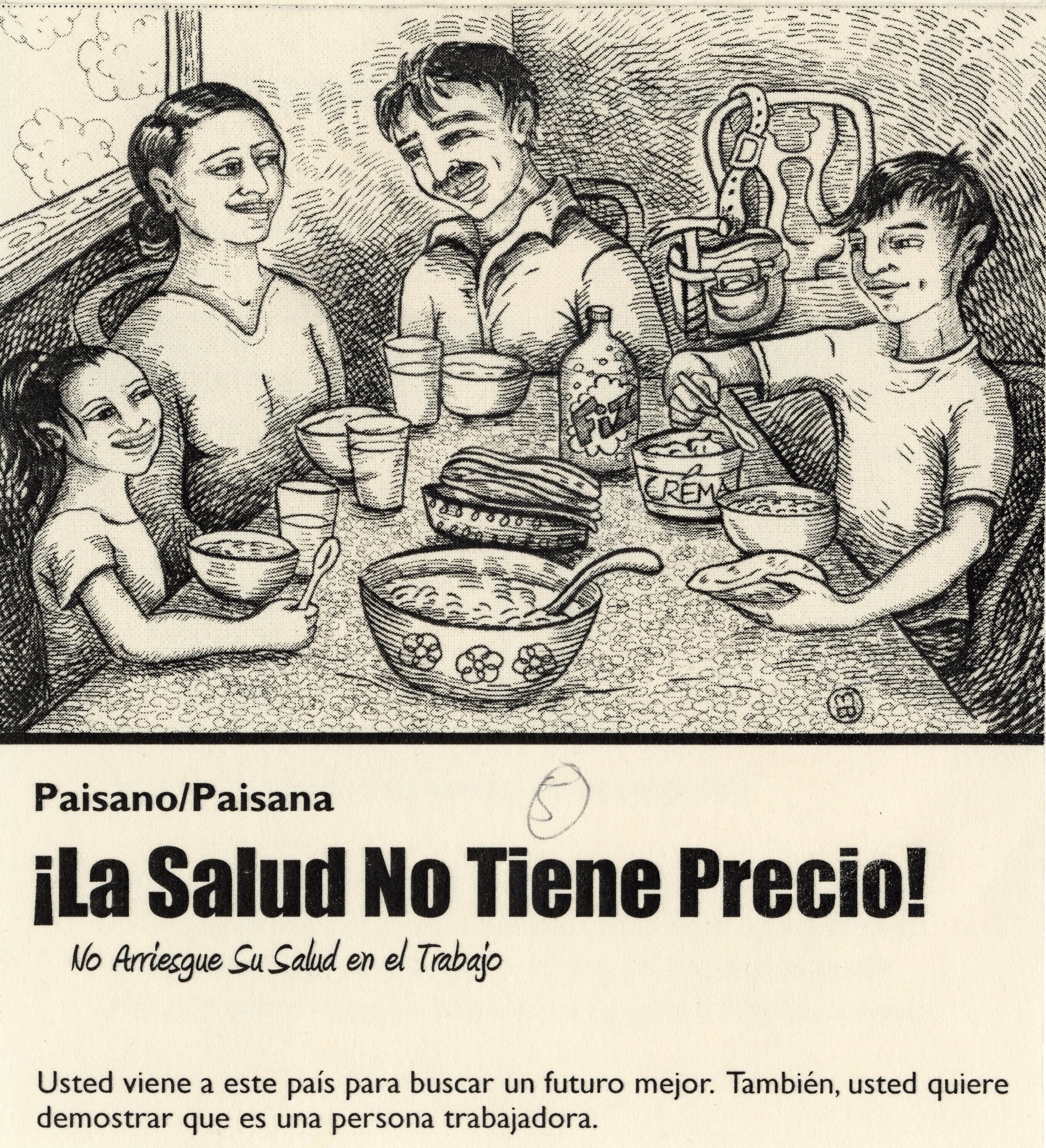
¡La Salud No Tiene Precio! Brochure
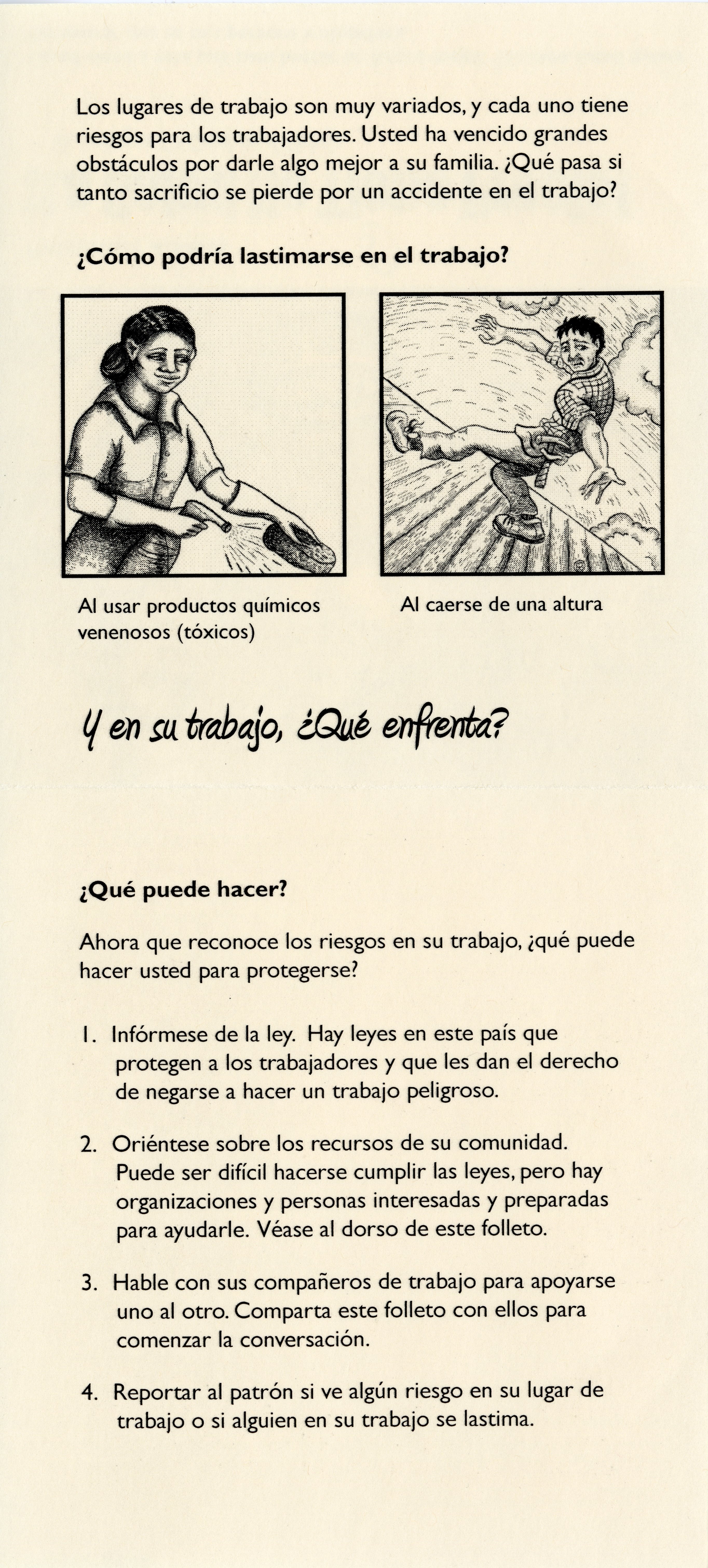
¡La Salud No Tiene Precio! Brochure