
Teaching People with Disabilities about Job Safety
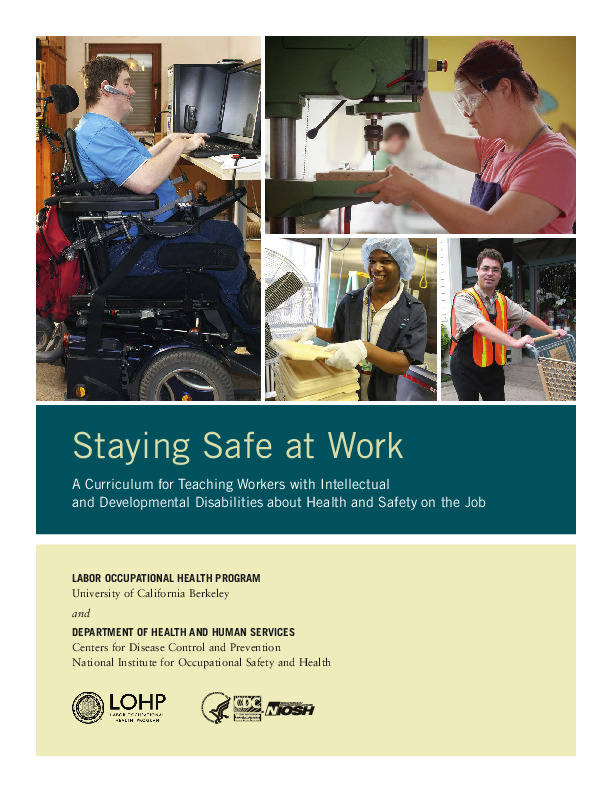
Workers with intellectual and developmental disabilities (IDD) often work in low-wage activities that can be hazardous, including light manufacturing, recycling, assembly, janitorial tasks, industrial laundries, landscaping services, and warehouse work. Almost all these activities have higher than average rates of injury.
In general, most workers lack health and safety training, but workers with IDD often have even fewer options for this training. One reason for the shortage of occupational health and safety training for workers with IDD has been the lack of curriculum for schools, support agencies, and employers. The Staying Safe at Work curriculum, developed by the Labor Occupational Health Program at the University of California, Berkeley and maintained by CDC’s National Institute for Occupational Safety and Health (NIOSH), was designed to help bridge this gap.
The curriculum is intended for employment agencies, community vocational rehabilitation programs, high-school transition programs, and other organizations and companies that place in jobs or hire workers with disabilities. The curriculum helps teach students or consumers/employees the foundational job safety and health skills that all workers need.