
Addressing Anti-Asian American Hate

The Asian American, Native Hawaiian and Pacific Islander (AANHPI) communities are a diverse group, with more than 50 ethnicities and 100 languages. Although anti-Asian racism has long been embedded in American history, the COVID-19 pandemic saw Asian Americans unfairly held responsible for the spread of the SARS-CoV-2 virus in the U.S. Racially motivated violence against Asian Americans—including the March 2021 Atlanta spa shootings that killed eight Americans, among them six women of Asian descent—added urgency to efforts to protect their health and safety.
In response, Congress passed the 2021 COVID-19 Hate Crimes Act, legislation providing resources to track, prosecute, and prevent hate crimes particularly targeting AANHPI communities. National and grassroots organizations turned their attention to addressing the root causes of anti-Asian racism, while activists mounted communication campaigns to promote healing in the Asian communities and to educate the broader population about the insidious nature of racism.
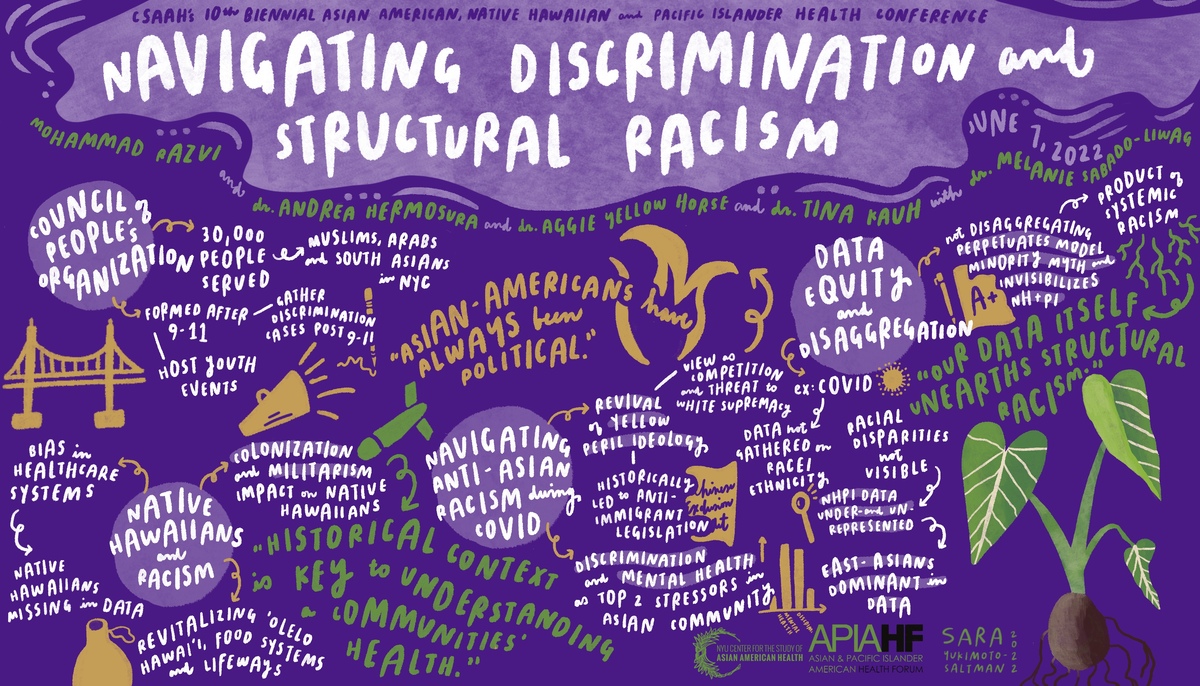
Created at the 2022 10th Biennial Asian American, Native Hawaiian and Pacific Islander Health virtual conference, this “graphic recording” visually records discussions about the current state of health disparities research among Asian Americans and Native Hawaiian and Pacific Islanders (AANHPI). In addition to noting the historic conditions that have contributed to structural racism experienced by AANHPI communities, the recording also acknowledges the ongoing need to break down data to reflect the diversity of AA and NHPI communities.
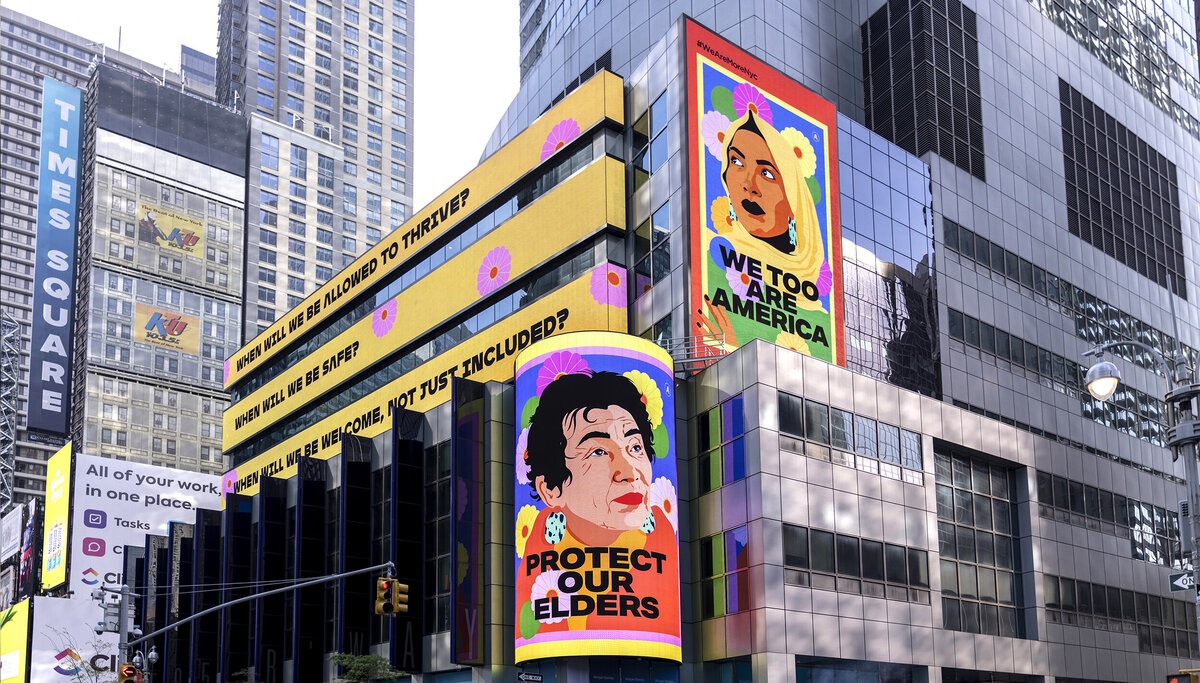
In 2021, Atlanta-raised, New York-based artist Amanda Phingbodhipakkiya launched a public art campaign in response to anti-Asian violence in New York and across the U.S., including Atlanta. To inform her We Are More campaign, Phingbodhipakkiya solicited stories from Asian Americans and Pacific Islanders across the U.S. She then produced her distinctive artworks celebrating AANHPI diversity. Installed throughout Times Square from electronic billboards to the sides of trash cans, her stance – “We Too Are America” – electronic underscores how Asian Americans and Pacific Islanders are frequently marginalized and stigmatized in American society, but also resilient. Resonating far beyond NYC, this campaign was featured on the cover of TIME magazine for a story titled, “We Are Not Silent: Confronting America’s Legacy of Anti-Asian Violence.”
Phingbodhipakkiya is one of the five artists completing art commissions for the Five Points MARTA station in downtown Atlanta.