
Communities in Action
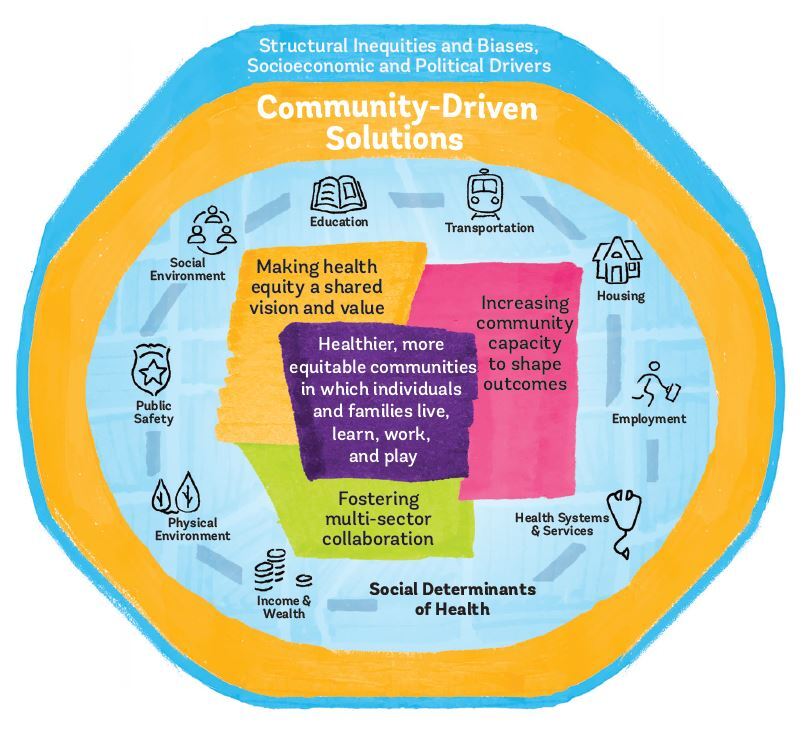
How Community Action Can Advance Health Equity
Our communities—the places where we live, work, go to school, and play—are key indicators of the social determinants of health. We all want to live in safe communities with access to food, transportation, libraries, parks, and opportunities to thrive-economically, socially, and culturally.
A place-based approach to community development can empower residents—especially those in under-resourced neighborhoods. Working with government, non-profit organizations, and faith-based partners, communities around the country are leading the way towards equitable redevelopment.
Here are some examples of innovative approaches to transforming places into equitable neighborhoods, including addressing systemic issues resulting from neglect and racism. Adapting strategies to the needs of each neighborhood, community organizers have developed sets of toolboxes that acknowledge historic conditions, value individual voices, and work to create effective coalitions that can lead to reimagined communities.