The Flint Lead Exposure Registry
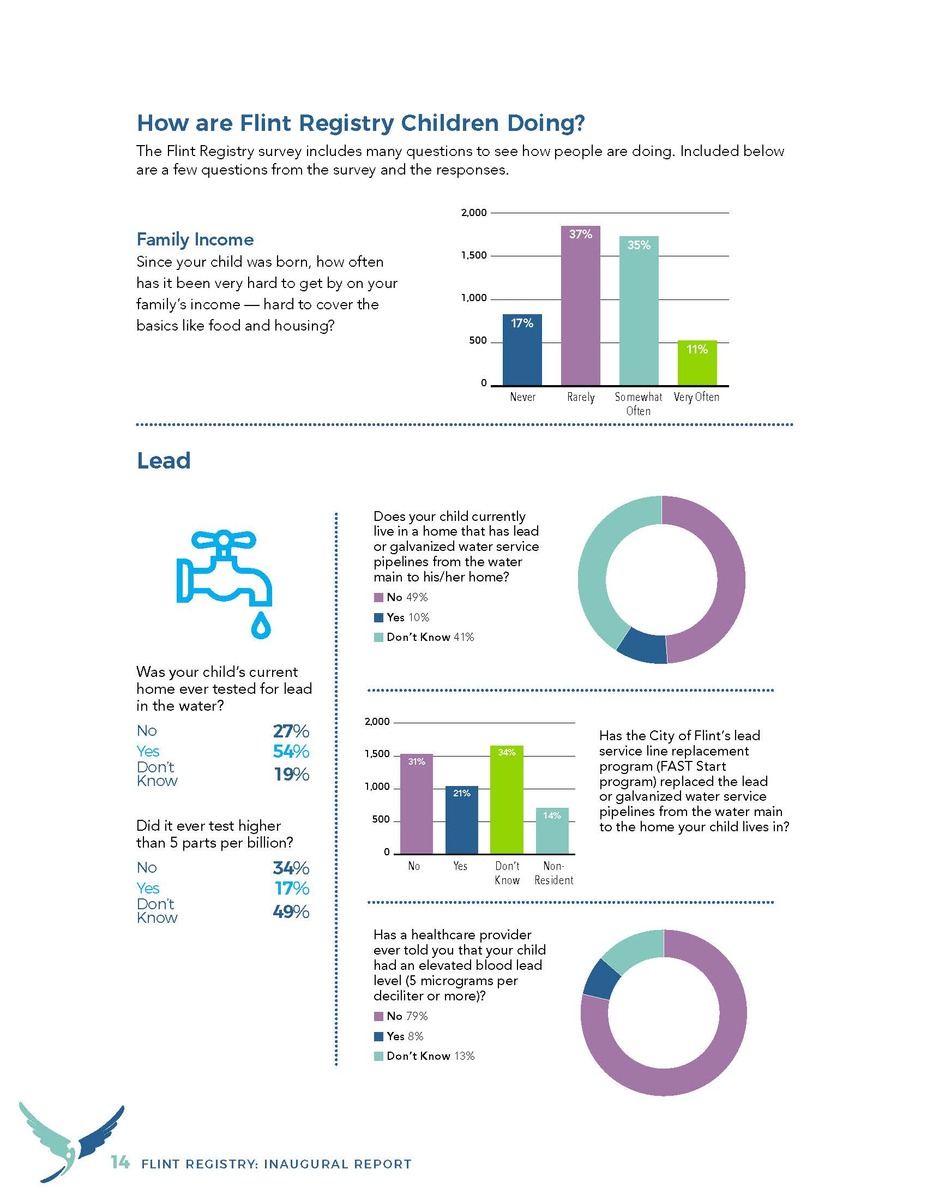
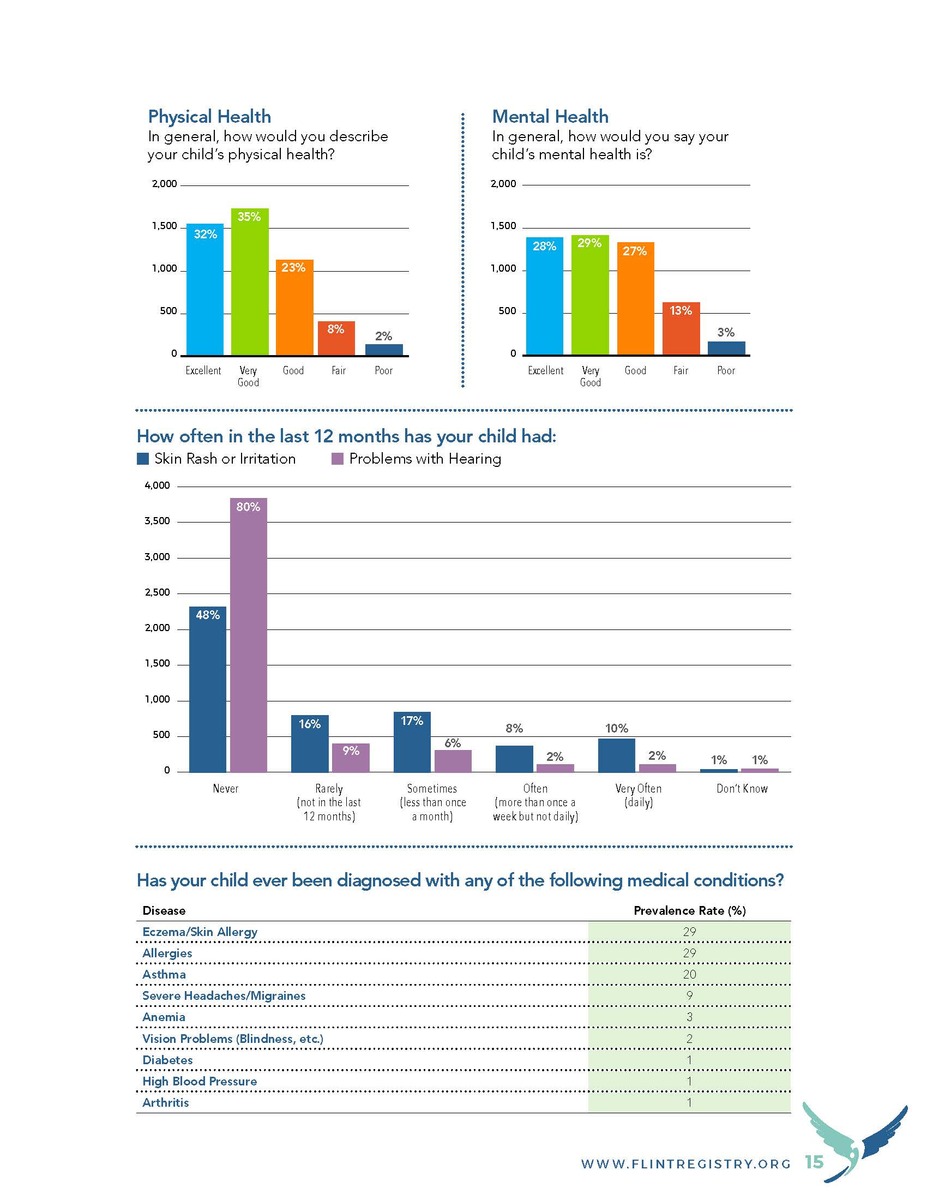
From April 25, 2014–October 15, 2015, approximately 99,000 residents of the City of Flint, Michigan, were exposed to lead when its drinking water source was switched from the Detroit Water Authority to the Flint Water System (FWS). On December 14, 2015, lead contamination in the FWS was declared a state of emergency and, by January 2016, CDC was assisting the City of Flint and the State of Michigan to develop a response and recovery plan.
In response to the Flint water crisis, Congress authorized funding for CDC to establish a voluntary Flint lead exposure registry. The goals of the registry are to support the City of Flint and the State of Michigan to identify eligible participants and ensure robust registry data; monitor health, child development, service utilization, and ongoing lead exposure; improve service delivery to lead-exposed individuals; and coordinate with other community and federally-funded programs in Flint. By 2021, more than 16,000 people were enrolled in the Registry, 4,981 of them children.