
Confronting the Facts: Maternal Death Rates in the U.S.
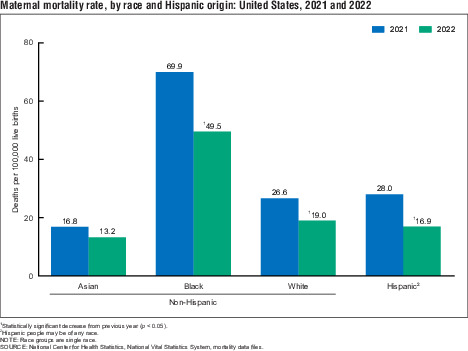
Maternal mortality, or the death of a woman while pregnant or within 42 days of the end of pregnancy, is considered a key indicator of maternal health. The U.S. has the highest maternal death rates of any developed country in the world. This crisis is nationwide, but the situation is especially acute in the South, particularly among African American women.
Black mothers and babies have the worst childbirth outcomes in the U.S., regardless of their income or education levels. Black women are three times more likely to die from a pregnancy-related cause than White women. Multiple factors contribute to these disparities, such as variations in healthcare quality, underlying chronic conditions, racism, and implicit bias. Social determinants of health prevent many people in racial and ethnic minority groups from having fair opportunities for economic, physical, and emotional health.
The tragedy is that 80% of all maternal deaths are preventable.
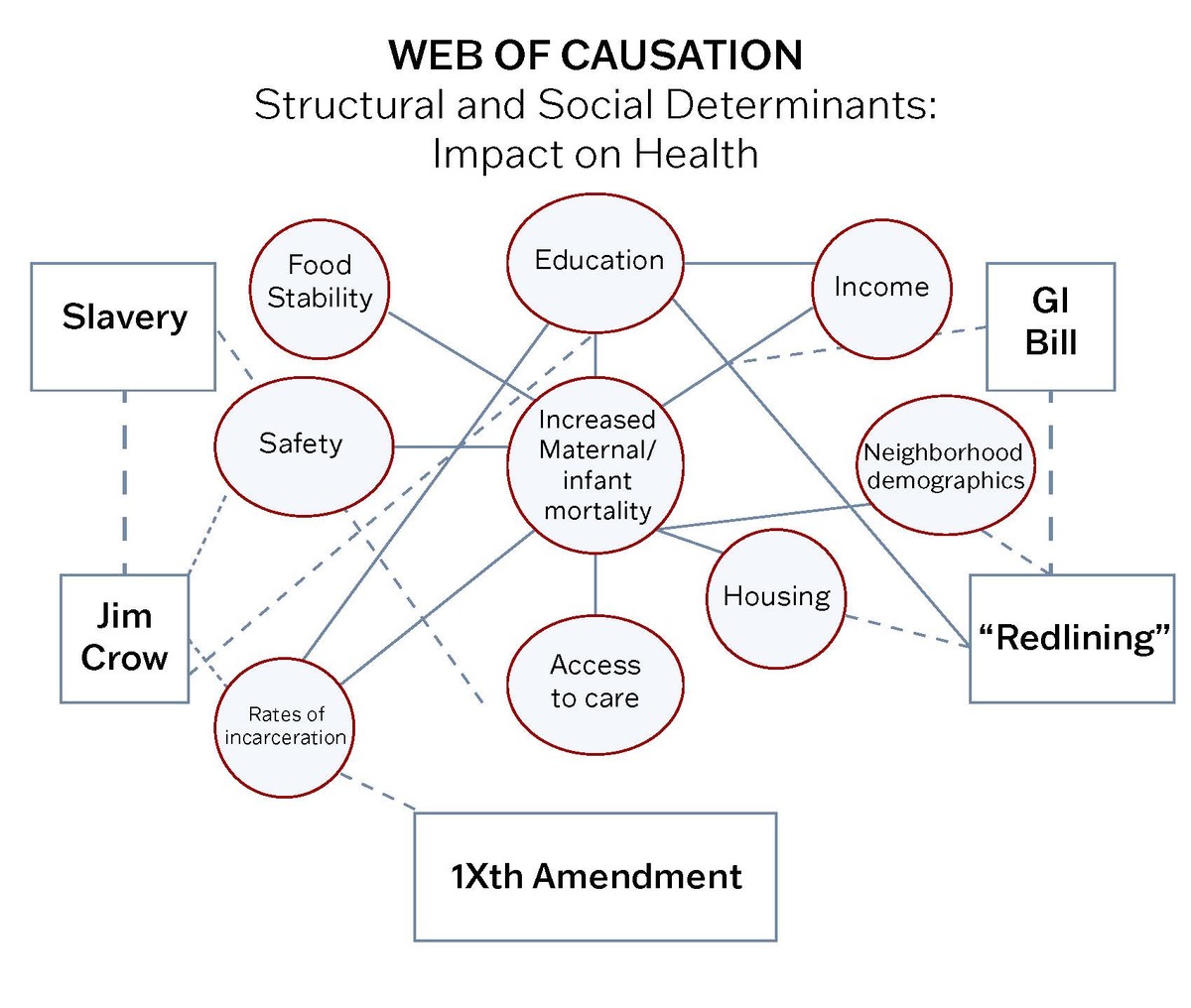
Reproductive justice activist Jessica Roach designed this graphic in 2016 to visualize the causal links between historic conditions and policy development in the U.S.; the current social determinants of health, such as income and housing; and increased Black maternal and infant mortality.
Ms. Roach is the Founder and Chief Executive Officer of Restoring Our Own Through Transformation (ROOTT) in Columbus, Ohio, a Black women led reproductive and birth justice organization dedicated to collectively restoring our well-being through self-determination, collaboration, and resources to meet the needs of Black families within communities.