
Community Action in Newport's North End
Zoning for Equity in Newport’s North End, 2022
Courtesy of the Newport HEZ
On May 11, 2022, a resident-led effort to advance health equity earned the unanimous support of the Newport City Council. The topic was amendments to the zoning ordinance for development of the Innovation District, a mixed-use 50+ acre technology hub in the city’s North End neighborhood. The North End, Newport, Rhode Island's lowest income neighborhood, had been cut off from the rest of the city since the 1960s by the Pell Bridge’s elevated ramp structure, which was scheduled to come down starting in 2020.
With the support of the Newport Health Equity Zone (HEZ), the Local Advisory Group proposed three zoning amendments to spur workforce housing in large development projects, to sharply define future parks as well as civic and open space, and to set the ground rules for writing Community Benefit Agreements (CBA’s) based on independent community-impact reports. The passage of these amendments means that resident priorities for equitable development are now a matter of public policy in the City of Newport.
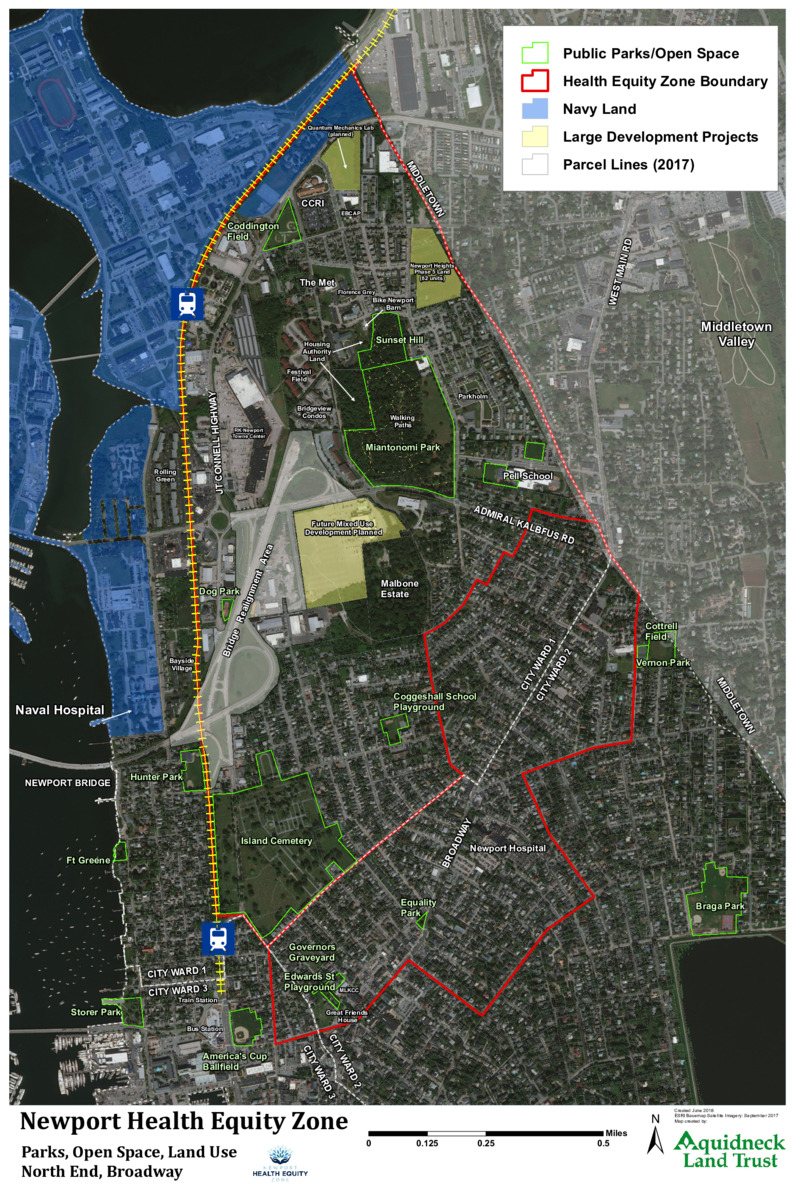
Addressing the Needs of Newport's North End
An affluent town with a significant tourism industry, Newport did not address equity as a city-wide priority until 2016 when the HEZ was launched. For example, prior to the establishment of the HEZ, the North End and Broadway communities had less access to parks and green spaces compared to the rest of Newport, although nearly half of the city’s population lived within the HEZ.
With the support of the lead partner the Aquidneck Land Trust, HEZ’s Greening Urban Spaces Working Group advocates for expanding and activating green spaces in the HEZ. It also works to ensure that residents have strong voices in the municipal planning process. As an indicator of the Working Group’s success, the 2017 Newport Open Space Master Plan included a section on equity, laying a foundation for addressing differences in access in the North End community.
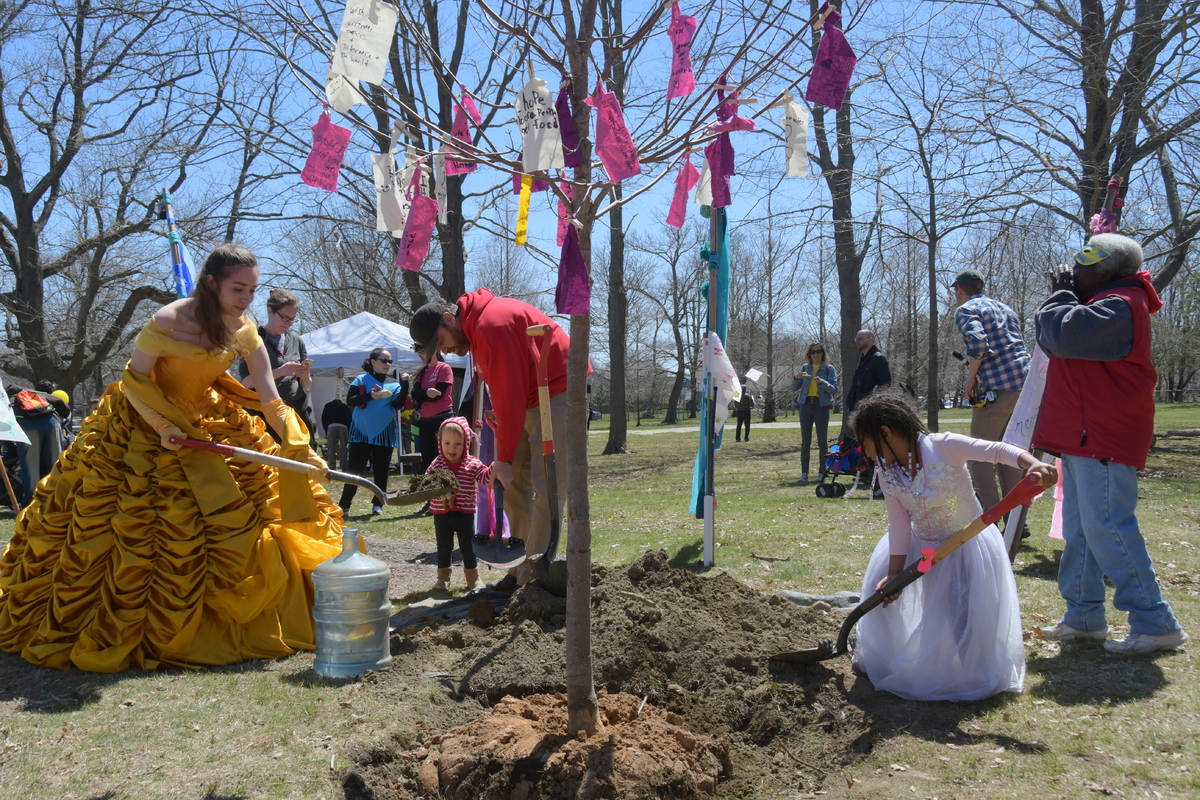
In 2018, the North End community celebrated this green space with a parade and tree-planting ceremony. Studies suggest that appropriately designed and maintained green space has the potential to reduce rates of domestic violence, violent crime, and gun violence, while making communities safer and keeping residents healthier.